Showing posts with label alice walker. Show all posts

Thursday, January 8, 2015

The Short Story and Ernest Gaines Syllabus

Last post, I talked about the Second Annual Ernest J. Gaines Center Summer Teaching Institute. With that in mind, I want to take the time in this blog post to do something a little different. Instead of writing a critical post, I would like to use today's entry to present you with a possible syllabus for teaching Gaines' works either in a secondary or post-secondary setting. When available, I have provided links to the stories below.


The Short Story and Ernest Gaines

Objective:

This course will examine various authors from around the world and how they influenced the writing of Ernest J. Gaines in particular. Along with authors that influenced Gaines, the course will also explore contemporaneous authors with Gaines and his work. Through this examination, we will challenge the monolithic view of literature, and in particular African American literature, by showing that authors do not receive their inspiration from a uniformed sources. While the course center on Ernest Gaines, it will provide us with an opportunity to explore other avenues as well: short story structure, peasantry in Russia and the United States, Modernism, the South as a space of memory, and other topics.

Readings (Chronological Order):

Ivan Turgenev A Sportsman's Sketches (1852)
Leo Tolstoy The Death of Ivan Illych (1886)
James Joyce "Ivy Day in the Committee Room" (1914)
Jean Toomer "Blood Burning Mood" and "Avey" (1923)
Ernest Hemingway "Soldier's Home," "Big Two-Hearted River Part 1," and "Big Two Hearted River Part 2" (1925)
William Faulkner "April 7, 1928" (Benjy's section in The Sound and the Fury) (1929)
Richard Wright "The Ethics of Living Jim Crow" and "Big Boy Leaves Home" (1938)
Eudora Welty "A Worn Path" (1941)
James Baldwin "The Outing" and "Going to Meet the Man" (1965)
Ernest Gaines Bloodline (1968) and The Autobiography of Miss Jane Pittman (1971)
Alice Walker "Everyday Use" (1973)
Children of the Night: The Best Short Stories by Black Writers 1967 to Present Ed. Gloria Naylor (1997)
Growing Up in the South: An Anthology of Modern Southern Literature Ed. Suzanne Jones (2003)

Assignments:

  • Response papers: These will be in the form of blog posts. I will set up a blog for the class, and you will post your responses there. Each post will require you to answer to my prompt and to respond to other students' responses as well. We will discuss how to do this in a proefssional manner during class. (Teachers, see Shannon Baldino's "The Classroom Blog: Enhancing Critical Thinking, Substantive Discussion, and Appropriate Online Interaction" for a discussion of blogs in the high school classroom.)
  • Wiki: Students will be placed into groups of four. Each group will be required to construct a collaborative wiki with ________ components on an author and text that we read in class. 
    • Each student must write a paragraph describing the class discussion for that author. For example, if the class discusses narrative voice in Faulkner, the response should talk about narrative voice and what the class said about it. 
    • The group must come up with five questions to think about based off of the class discussion or research. 
    • The group must construct an annotated bibliography of six sources. The annotations must be 250-500 words and contain a section stating the source's credibility, a summary of the source, a way to use that source in a research project. 
    • The group must construct a list of symbols/allusions/or other references in the stories. The number here will vary, but each entry must provide information about where it comes from (especially for an allusion) and what purpose it serves in the context of the story. 
    • The group must construct a review of the short story. The review must be between 500-1000 words. Remember, a review is not a summary. Some summary is necessary, but the thrust of the review should be about the story's meaning and importance. 
    • The group must construct a creative page. This page can be anything that you desire. For example, it could be a hand drawn map of the setting. It could be sketch of one of the scenes. It could be a Prezi talking about the author and the themes of the story. It could be a video discussion. This page is open to whatever you want to do.   
  • Research paper: the paper must explore connections between at least two of the authors discussed in class. For example, you could explore the pastoral in Turgenev and Hemingway. Or, you could explore representations of the South in Wright and Baldwin. The paper must be 8-10 pages. You must use 4-6 secondary sources as well to support your argument.


What other types of assignments would you require in a class like this? For class discussion, I would incorporate the "fish bowl" activity. The "fish bowl" has worked well for me in the past, especially in my literature classes.  As well, the wiki assignment worked well. After the initial apprehensiveness of students to work together in this way, students created some amazing wikis and creative pages. Plus, the information provided them with a head start on their research papers. The wikis helped to show students that learning and writing are not solitary activities; they require interaction with others.

Regarding the readings above, I chose them because of their relationship to Ernest Gaines. Gaines has stated, at various times, the influence of many of the authors above. Along with his influences, I added contemporaries of Gaines such as Wright, Baldwin, and Walker to show his work in relationship to those he wrote alongside. The two anthologies listed provide short stories by African American writers and Southern writers. There are works in there that could be used to expand upon the themes and topics in the class.

List of previous blog posts that may be of help with the readings in this course:

Please provide your insights and suggestions in the comments below. What other texts would you suggest in a class like the one above? What assignments and activities have worked for you in the classroom when teaching literature? If you have a syllabus or reading list you would like to propose, let me know at gainescenter@louisiana.edu.


Tuesday, September 9, 2014

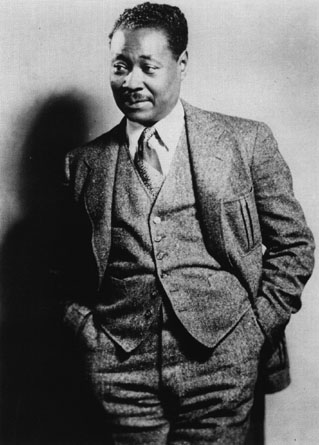
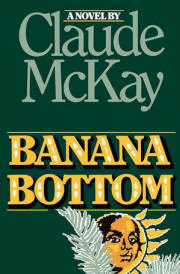
Claude McKay, Banana Bottom, and Ernest Gaines

It's well known that African American writers did not influence Ernest J. Gaines during his formative years as a writer. Instead, authors such as Hemingway, Faulkner, Tolstoy, Turgenev, and Joyce did.  In 1975, Gaines did say, however, "Probably the only Black writer who has influenced my work in Zora Neale Hurston" (Carter 85). Gaines does not mention a specific text by Hurston, in the 1975 interview or in later interviews. So, I cannot say with certainty what Hurston text influenced him. It must be remembered that Hurston's work fell out of favor during her lifetime and it wasn't until the early 1970s that Alice Walker and others resurrected her. What fascinates me is the fact that Hurston served as an influence. This can be seen, of course, in Gaines' use of dialect. However, I am not interested in Hurston for this post. Instead,  I am interested in Claude McKay.

Both McKay and Hurston were major figures during the Harlem Renaissance. McKay, a Jamaican born author, wrote the famous poem "If We Must Die" in response to the Red Summer of 1919. He also wrote Home to Harlem (1928), a picaresque novel that sees Jake, an African American soldier who deserts the Army during World War I, finding his way in the world, both abroad and in the United States. Gary Holcomb directly links McKay's novel with Hemingway's The Sun Also Rises (1926), arguing that the novel, instead of being a work that would cause DuBois to take a bath after reading it, is "a rewriting of the white author's art for black transnational purpose" (136). After writing Home to Harlem and Banjo (1929), both of which deal with the big city in the United States, McKay wrote Banana Bottom (1933), a novel that focuses on Bita Plant and her life and that of the community in Jamaica  around the turn of the twentieth century.

Reading Banana Bottom, I could not help but think about Gaines and what may have been different if he read a work like this during his formative years. Just as Toomer could have affected Gaines' style indirectly through Hemingway, McKay's possibly did as well through Hurston. John Lowe points out the similarities between McKay's novel and Hurston's Their Eyes Were Watching God (1937) which she wrote while in the Caribbean. That discussion, however, is for another day. Here, I do not want to speculate on what would have happened if Gaines read McKay's novel early on, but I do want to point out the similarities between Banana Bottom and Gaines' work. As discussed in earlier blog posts, Gaines sought out books about peasants and peasantry when he entered the library in 1948. He found those books, but he didn't find "his" people in those books. Instead, he found European peasants and American whites. That is partly what inspired him to write.

McKay's novel deals with the peasantry in Jamaica, and it also contains the person who leaves, becomes educated, and returns to the community. Bita, after being "raped" at age twelve, gets supported by the local missionaries and sent to school in England. There, she becomes "educated" and returns to Jamaica, and Banana Bottom, about seven years later. The novel partly focuses on her navigating the "civilized" world of the white Europeans and the "native" world of her own community in Banana Bottom. In this way, Bita can be seen in relation to characters like Jackson and Grant in Gaines' works.

Apart from the central narrative of the novel that focuses on Bita, descriptions of the peasantry and more specifically conflicts between the local community and immigrants from India and China along with a migration of workers away from Jamaica to Panama for better opportunities appear. After the hurricane near the end of the novel, some of the Negro workers who had a large pay day clearing debris and wreckage took their money to Panama to make more working on the canal. Along with some of the workers leaving, the community "redoubled and grew in bitterness against the immigration of Chinese and the importation of Indian coolie labor" (294). This is only one example of the conflicting groups in the novel. The immigrants do not appear as characters like the Cajuns do in Gaines; however, they are present and take labor and wages away from the "Negro" workers.       

This is just a brief discussion of McKay's novel and some similarities to Gaines' work. For a longer discussion, make sure you leave a comment below.

Carter, Tom. "Ernest Gaines." Conversations With Ernest Gaines. Ed. John Lowe. Jackson: University of Mississippi Press, 1995. 80-85. Print.
Holcomb, Gary. "Hemingway and McKay, Race and Nation." Hemingway and the Black Renaissance. Eds. Gary Edward Holcomb and Charles Scruggs. Columbus: The Ohio State University Press, 2012. 133-150. Print.
McKay, Claude. Banana Bottom. New York: Harcourt Brace Jovanovich, Inc., 1961. Print.

Thursday, September 4, 2014

The Response to The Autobiography of Miss Jane Pittman

The Ernest J. Gaines Center's archives contain numerous letters of praise for the The Autobiography of Miss Jane Pittman (1971). Authors and activists such as James Baldwin, Alice Walker, Jesse Jackson, James Allen McPherson, and John A. Williams. Baldwin wrote to Gaines saying, "I think you are an extraordinary artist indeed and Jane Pittman is a most moving, most beautiful, most truthful book." James Allen McPherson claims that Gaines' novel fulfilled Richard Wright's 1945 prophecy. Wright stated, "There is a great novel yet to be written about the Negro in the South; just a simple, straight, easy, great novel telling how they live and how they die; what they see and how they feel each day; what they do in the winter, spring, summer, and fall. Just a novel telling of the quiet ritual of their lives. Such a book is really needed." McPherson says The Autobiography of Miss Jane Pittman is this book because it presents a rich folk character in the oral tradition with a respect for ancestors and their wisdom. Carrying the thought of ancestors further, Alice Walker wrote, "My reaction to Mr. Gaines's work is unusually emotional. For example, it has become quite ordinary for me, in the middle of reading one of his extraordinary paragraphs, to suddenly stop and thank our ancestors, Mr. Gaines's and mine, that Mr. Gaines exists."

All of the laudatory comments above referred to the novel. These do not include the multitudes of reviews, letters, and other items housed within the archives relate to the film version. While many praise the film, some have comments that congratulate Gaines on the film but point out its differences from the novel. Overall, though, these letters express the overall importance of the film in 1974. I discussed this briefly in a previous post, but I will let the letters and reviews speak for themselves here. Bill Decker, an agent at the Dial Press who published the novel, wrote to Gaines and says that he and his wife thoroughly enjoyed the film and expected it, based on advanced reviews, to be as good as the book. However, he laments "that  millions of people who saw the film will never really get to know Miss Jane, your Miss Jane." Even with this caveat, Decker concluded the letter stating that "it is going to do a lot of good." What that good is, Decker did not say, but it could be assumed that he is referring to race relations. Donna Schrader, another employee at the Dial Press, wrote that she spoke with an African American mother of three after the film's debut. The mother said her children, even the seven year old, watched the entire movie. She went on to describe seeing the Adam Clayton Powell exhibit at the Adam Clayton Powell Memorial Library  and overhearing visitors say, "Wait till the children see this. Wait till the children see this." To Schrader, that is the same thought she had after seeing the film. The following generations need to understand what came before, the struggles and the joys, and this is partly what Gaines' novel and the film version provided, a history that did not appear in the textbooks students read in schools but one that focused on "his people." 

The film, which won nine Emmys, showed that the nation was prepared for stories on television that centered around African American characters. It also, as mentioned in the previous post, made some realize the long enduring oppression that African Americans have experienced in this country. While a work of art can't undo 400 years of racism, it can highlight the problems and cause some to reevaluate their previous thoughts in regards to race. Gaines even says as much in a newspaper article about his visits to the set during filming. Gaines describes speaking with "an elderly white man" at lunch. The man knew the area, and looking around at the tables, he noticed the people eating. After introducing Gaines to his son, who worked on the film, the man simply said, "This is going to be a great picture. . . . I know it. Just look at what's happening here. Look at the people sitting and eating together, working together, talking. You think this could have happened 25 years ago? No, things changed." Gaines ends the article there, voicing the change that can occur through art. Forty years after the film, there are still problems, but works like The Autobiography of Miss Jane Pittman can, and have, in some small way, provide individuals with the information needed to reevaluate their positions in relation to those problems, hopefully causing people to look for solutions instead of perpetuating the problems.  
        

Tuesday, July 29, 2014

Gaines and the Struggle to Become a Writer

1964 cover
Catherine Carmier (1964), on first glance, comes across as a Romeo & Juliet type of story. However, nothing could be further from the truth. Published when Gaines was 31, the novel provides an essential starting point to understand Gaines' work. Catherine Carmier provides readers with the major themes and character types that they will see all the way through Gaines' oeuvre. Mary Ellen Doyle even states, "This last novel [A Lesson before Dying], especially, reminds one--with significant differences--of the first" (203). I will discuss the themes and character types that begin in Catherine Carmier in the next blog post. Here, I want to talk about Gaines' determination to succeed as a writer and to have his first novel published.


When he moved to Vallejo, California in 1948 to be with his mother and his step-father, Gaines entered a library for the first time, by accident. His step-father didn't want him hanging around the street corners, so Gaines went to the YMCA first. There, he laced up a pair of boxing gloves and fought someone who knew how to box. The other pugilist punched Gaines in the mouth, and at that point, Gaines "took the boxing gloves off with the teeth that were not loosened, and went to the library" ("Auntie," 22). The library opened up numerous worlds to Gaines. He read the French and Russian writers who described the peasants in their own countries. He came across other authors as well. However, none of the books they wrote contained his people from Southern Louisiana. Not seeing his people in the novels, Gaines decided he would write about them and the land where they resided, providing them with a voice. Discussing his desire to become an author in "Auntie and the Black Experience in Louisiana," Gaines talks about why he chose to write about the area where he grew up instead of writing about New Orleans or San Francisco. The passes is worth quoting at length:
So I thought that it was about time that I did my own book about that little place that I had come from. After writing in long hand what I thought was a book, I then begged my mother to rent me a typewriter. She did, not because she thought I would become a writer, or that she wanted me to become a writer--she did it to keep me quiet. My step-father made a trip home from the Merchant Marines that summer--the summer of 49--and each time he passed by me pecking at the typewriter, he would say to himself, but loud enough for me to hear: "That boy going crazy there, yeah." My friends wanted me to play softball or football, and when I did not show up to the park, they would come by the house to see what was going on. They laughed when I told them I was writing a book. When I read them a part of what I had written, they said, "No, if you're going to write, write about us here. Lay off that plantation stuff everybody's trying to forget. If you're going to write about the South, at least write about New Orleans." But New Orleans was not my home; I lived a hundred miles from New Orleans. Oscar, in Pointe Coupee Parish, was my home and I had someone there who I would never deny [Aunt Augusteen]. ("Auntie," 22-23)    
With all of this in mind, why write about Oscar, Louisiana and not New Orleans, especially while others like Richard Wright wrote about urban Chicago and James Baldwin wrote about New York? Why drudge up the past when moving forward is what mattered? Why should we concern ourselves with individuals who lived not in the cosmopolitan city of New Orleans but in the farmland of Oscar? We should care because their stories matter. Gaines saw this from the beginning. He did not see the people that he knew in the history books or novels that he read for school. Unless Gaines wrote about them, they would remain nonexistent to the public. They would be buried in the unmarked graves behind Riverlake Plantation and eventually removed in the name of agricultural progress. This, in a nutshell, is why we have Catherine Carmier and Gaines' later works.

Undated Meal List
After completing the novel in 1949, Gaines sent it off to a publisher in New York. He waited to hear what fortunes The Little Stream would bring him so that he could send money back to Louisiana. No fortunes came; instead, the manuscript returned, rejected by the publishing house. Gaines went to the incinerator in the back yard and burned The Little Stream. The novel that originated that summer would not see the light of day until 1964. During the time between the initial rejection and the publication of Catherine Carmier, Gaines attended San Francisco State College, went into the military, and continued writing, even having a few short stories published. He read more and wrote more. After graduating from college in 1957, Gaines gave himself ten years to become a writer. He would write in the morning and work at jobs that he didn't necessarily like in the afternoons. He survived on around $175 a month.


Even though Catherine Carmier appeared in 1964 and won the Joseph Henry Jackson Literary Prize, it did not sell well. Gaines didn't receive some independence to write until he garnered a small book contract in 1966. Part of the novel's lackluster sales had to do with movement towards a more militant stance regarding African American literature. While some argue that Gaines lacks the "militant" angle, it can be seen in his writing and interviews. In 1975, he told Tom Carter that the last thing Southern whites wanted to see was humanity in African Americans: "I knew the way to show that humanity was to do something positive. Some guys get angry and go to a punching bag. As they're jabbing at it they're developing their muscles; they're getting sharper. I try to use the anger in a positive way, to create a lasting punch, one that will have a longer effect than just screaming or calling somebody an MF or son of a bitch" (84).

As some African American authors such as Amiri Baraka saw literature as purely protest, eschewing style for content, Gaines saw that style as well as substance needs to be considered. As he heard about the violence during the 1960s, especially in the South, Gaines said, "I would sit at my desk until I had written the perfect page" because through writing the perfect page "I would show the Bull Connors and the Faubeses, and the Wallaces and the Thurmans that I could do anything with those twenty six letters that they could, and I could do it better than any of them could" ("Auntie," 26). By taking this stance, Gaines inspired other writers, among them Alice Walker. In a 1969 letter housed in the Ernest J. Gaines Center, Walker discusses the influence of Gaines' short story "The Sky is Gray" and his use of dialect on her writing. She also mentions that after reading Of Love and Dust and Bloodline from noon till six in the morning she is "only sorry not to have Catherine Carmier to read now." Later, in a 1971 letter to Dial Press after the publication of The Autobiography of Miss Jane Pittman, she writes a postscript, "If ever Catherine Carmier is re-issued (the only Gaines fiction I haven't read), I hope I will be one of the very first to know." Even in 1971, Walker could not find a copy of the novel. Later, it would be reissued, translated, and widely available a people throughout the world recognized Gaines work.

Carter, Tom. "Ernest Gaines." Conversations with Ernest Gaines. Ed. John Lowe. Jackson: University of Mississippi Press, 1995. 80-85. Print.

Doyle, Mary Ellen. Voices from the Quarters: The Fiction of Ernest J. Gaines. Baton Rouge: Louisiana State University Press, 2002. Print.

Gaines, Ernest J. "Auntie and the Black Experience in Louisiana." Louisiana Tapestry: The Ethnic Weave of St. Landry Parish. Eds. Vaughn B. Baker and Jean T. Kreamer. Lafayette: Center for Louisiana Studies, 1983. 20-29. Print.