Showing posts with label claude mckay. Show all posts

Tuesday, September 9, 2014

Claude McKay, Banana Bottom, and Ernest Gaines

It's well known that African American writers did not influence Ernest J. Gaines during his formative years as a writer. Instead, authors such as Hemingway, Faulkner, Tolstoy, Turgenev, and Joyce did.  In 1975, Gaines did say, however, "Probably the only Black writer who has influenced my work in Zora Neale Hurston" (Carter 85). Gaines does not mention a specific text by Hurston, in the 1975 interview or in later interviews. So, I cannot say with certainty what Hurston text influenced him. It must be remembered that Hurston's work fell out of favor during her lifetime and it wasn't until the early 1970s that Alice Walker and others resurrected her. What fascinates me is the fact that Hurston served as an influence. This can be seen, of course, in Gaines' use of dialect. However, I am not interested in Hurston for this post. Instead,  I am interested in Claude McKay.

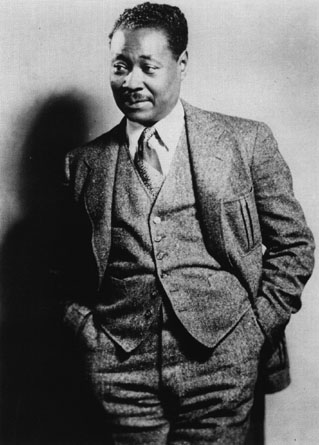
Both McKay and Hurston were major figures during the Harlem Renaissance. McKay, a Jamaican born author, wrote the famous poem "If We Must Die" in response to the Red Summer of 1919. He also wrote Home to Harlem (1928), a picaresque novel that sees Jake, an African American soldier who deserts the Army during World War I, finding his way in the world, both abroad and in the United States. Gary Holcomb directly links McKay's novel with Hemingway's The Sun Also Rises (1926), arguing that the novel, instead of being a work that would cause DuBois to take a bath after reading it, is "a rewriting of the white author's art for black transnational purpose" (136). After writing Home to Harlem and Banjo (1929), both of which deal with the big city in the United States, McKay wrote Banana Bottom (1933), a novel that focuses on Bita Plant and her life and that of the community in Jamaica  around the turn of the twentieth century.

Reading Banana Bottom, I could not help but think about Gaines and what may have been different if he read a work like this during his formative years. Just as Toomer could have affected Gaines' style indirectly through Hemingway, McKay's possibly did as well through Hurston. John Lowe points out the similarities between McKay's novel and Hurston's Their Eyes Were Watching God (1937) which she wrote while in the Caribbean. That discussion, however, is for another day. Here, I do not want to speculate on what would have happened if Gaines read McKay's novel early on, but I do want to point out the similarities between Banana Bottom and Gaines' work. As discussed in earlier blog posts, Gaines sought out books about peasants and peasantry when he entered the library in 1948. He found those books, but he didn't find "his" people in those books. Instead, he found European peasants and American whites. That is partly what inspired him to write.

McKay's novel deals with the peasantry in Jamaica, and it also contains the person who leaves, becomes educated, and returns to the community. Bita, after being "raped" at age twelve, gets supported by the local missionaries and sent to school in England. There, she becomes "educated" and returns to Jamaica, and Banana Bottom, about seven years later. The novel partly focuses on her navigating the "civilized" world of the white Europeans and the "native" world of her own community in Banana Bottom. In this way, Bita can be seen in relation to characters like Jackson and Grant in Gaines' works.
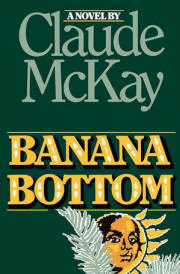
Apart from the central narrative of the novel that focuses on Bita, descriptions of the peasantry and more specifically conflicts between the local community and immigrants from India and China along with a migration of workers away from Jamaica to Panama for better opportunities appear. After the hurricane near the end of the novel, some of the Negro workers who had a large pay day clearing debris and wreckage took their money to Panama to make more working on the canal. Along with some of the workers leaving, the community "redoubled and grew in bitterness against the immigration of Chinese and the importation of Indian coolie labor" (294). This is only one example of the conflicting groups in the novel. The immigrants do not appear as characters like the Cajuns do in Gaines; however, they are present and take labor and wages away from the "Negro" workers.       

This is just a brief discussion of McKay's novel and some similarities to Gaines' work. For a longer discussion, make sure you leave a comment below.

Carter, Tom. "Ernest Gaines." Conversations With Ernest Gaines. Ed. John Lowe. Jackson: University of Mississippi Press, 1995. 80-85. Print.
Holcomb, Gary. "Hemingway and McKay, Race and Nation." Hemingway and the Black Renaissance. Eds. Gary Edward Holcomb and Charles Scruggs. Columbus: The Ohio State University Press, 2012. 133-150. Print.
McKay, Claude. Banana Bottom. New York: Harcourt Brace Jovanovich, Inc., 1961. Print.

Wednesday, July 9, 2014

University of Houston-Downtown's "Read Out" for A Lesson before Dying

Posters at the "Read Out"
Yesterday, I had the opportunity to take part in the University of Houston-Downtown's Center for Critical Race Studies' "Read Out" for A Lesson before Dying. The event brought together university professors, college students, high school and middle school students, librarians, and other community members. Participants heard encouraging words about the importance of books, education, and defining yourself from Dr. Vida Robertson and Dean DoVeanna Fulton. After these introductory words of encouragement, the participants broke into small groups for discussions on the novel.

I had the opportunity to walk around to the various groups during this period, and what I heard inspired me regarding the power of the written word. A professor and college student volunteers led each group, and each one had its own unique dynamic. One group encountered more a of a lecture type setting while another could be seen sitting around in a large circle discussing how the participants either define themselves or let others define them. Among the varying settings, students and group leaders broached important topics that arose throughout the novel and how those topics relate to their own day-to-day experiences. One group talked about the setting of the novel, the late 1940s in the Jim Crow South, and how the setting occurred less than 100 years after the "end" of slavery in the United States, seeing the residual effects that slavery has had on our society. Another group talked about defining yourself, and the group brought up the defense attorney's comments where he calls Jefferson a "hog" from the beginning of the novel. Along with these topics, one of the groups discussed the issue of colorism in the novel and that led to them speaking about whether or not colorism still exists or not and whether or not anyone had experienced it. Finally, one group spoke about the creation and destruction of myths and mentors, helping students understand that others work to define them and to comprehend the importance of figures in their life that they can look up to for support and guidance.

After the group discussions and lunch, I had the opportunity to speak with the participants gathered. I spoke broadly on the Ernest J. Gaines Center, Gaines' influences, his global prominence, the land he writes about, and some historical context for the novel. Throughout the day, the participants received much more than just a book discussion. They were able to experience how a novel that takes place in the past can affect and speak to us in our own present lives. Ultimately, the "Read Out" showed participants that books truly do create an "identification" with the character(s), to borrow a term from Kenneth Burke. Dr. Robertson told the participants that all writing is, at its core, a political act, and I would say a rhetorical one. Gaines himself even says as much. When talking about what he wants readers to get out of works, Gaines says:
Number one, I would want the black youth to say, "Hey, I am somebody," and I'd want the white youth to say, "Hey, that is part of me out there, and I could understand myself truly if I can understand my neighbor, if I can understand the person around me." That's the only way one can understand himself, if he can understand other things around him. You know Donne's "No man is an island" and "Don't ask for who the bell tolls"--every little piece of things around us makes us a little bit whole. I mean we can go through the world being half people, and most of us do that most of our lives. But in order to understand more about ourselves and the world, we must understand what's around. So that's what I'd want: the white kid to understand what the black kid is, and the black kid to understand who he is. (Gaudet and Wooton 215-216)
Dr. Robertson concluded by reading Claude McKay's "If We Must Die," a poem he wrote after World War I and in response to the Red Summer of 1919.
If we must die, let it not be like hogs
Hunted and penned in an inglorious spot,
While round us bark the mad and hungry dogs,
Making their mock at our accursed lot.
If we must die, O let us nobly die,
So that our precious blood may not be shed
In vain; then even the monsters we defy
Shall be constrained to honor us though dead!
O kinsmen! we must meet the common foe!
Though far outnumbered let us show us brave,
And for their thousands blows deal one death-blow!
What though before us lies the grave?
Like me we'll face the murderous, cowardly pack,
Pressed to the wall, dying, but fighting back!
Poster at "Read Out"
Challenging the students to define themselves and to think about the communities they inhabit and how to give back to those communities, the event allowed participants to explore Gaines' novel on another level than just textual. It provided a space for the novel to work as a text of rhetorical persuasion and a call to action. Ultimately, this is what all good works of literature do, and the "Read Out" showed that this is what A Lesson before Dying does.


Gaudet, Marcia and Carl Wooton. "An Interview With Ernest Gaines." Conversations with Ernest Gaines. Ed. John Lowe. Jackson: University Press of Mississippi, 1995. 200-216. Print.