Showing posts with label zora neale hurston. Show all posts

Thursday, May 28, 2015

First Ever Ernest J. Gaines Society Panel at ALA 2015

May 23, 2015, saw the first ever panel of the Ernest J. Gaines Society. The panel took place at the American Literature Association and involved three papers on the continued importance of the works of Ernest J. Gaines. Each paper brought new perspectives to Gaines scholarship and opened new avenues for examining Gaines's works in relation to the American and African American literary tradition. The panel, entitled "Rethinking Race and Culture in the Fiction of Ernest J. Gaines," explored differing thematic elements in Gaines;s works. Covering "A Long Day in November," The Autobiography of Miss Jane Pittman, and Catherine Carmier, the papers varied from discussing marital traditions, literary genres, and social hierarchies. Overall, the panel presented eye-opening avenues to expand Gaines scholarship. For this post, I would just like to briefly discuss the papers, providing a little information about each of them.

Pearlie Peters's "Rekindling Old Marital Traditions in African American Folk Culture, Southern Style: Domestic Violence in Selected Fiction of Ernest J. Gaines and Zora Neale Hurston" opened up the panel. In her paper, Peters discussed the closing scene of Gaines's "A Long Day in November" where Amy tells Eddie that he needs to beat her in order to save face in the community. When Amy threatens to leave Eddie again at the end of the end of the story, she tells him that he better stop her before she leaves for good. Eddie picks a switch off the floor and hits her twice. Amy tells him, "Beat me," and he proceeds to beat her even harder (74). After he beats her, Eddie runs towards Amy and picks her up to take her to bed. At dinner, Amy's face is swollen and she's been crying. Eddie finally asks Amy why she wanted him to beat her, even when he didn't beat her for that thing with Freddie Jackson; she responds by saying, "Because I don't want you to be a laughingstock of the plantation" (75).

Upon first reading this scene, it confounded me because I did not understand why Amy wanted Eddie to beat her so he would not be the laughingstock of the community. Perters's presentation covered this topic in some detail, even bringing in examples from Zora Neale Hurston's Their Eyes Were Watching God. Amy's request, as Peters argues, comes from a space that conflates the public and the private. Everything in the quarters becomes public in some form or another, so if Eddie does not rectify the situation of his wife deciding to leave him, the whole community will see him as a laughingstock because his masculinity has been contested. Peters draws on Robert Hemenway's "Are You a Flying Lark or a Setting Dove" and Hurston's "Story in Harlem Slang" and "Characteristics of Negro Expression" to show that the domestic violence portrayed at the end of "A Long Day in November" and in Hurston's novel was once perceived as being good, respectful domestic violence. This does not justify domestic violence in any way; she just maintains that the situations shown within these texts have precedent in socio-cultural folk communities.

Erin Salius's "Rethinking Historical Realism in The Autobiography of Miss Jane Pittman" argues that the way we typically read Gaines's famous 1971 novel needs to be altered. Instead of reading Pittman as historical realism, Salius proposes that we read it as a precursor to more disruptive neo-slave narratives such as Octavia Butler's Kindred, Charles Johnson's Middle Passage and Ishmael Reed's Flight to Canada. Scholars place Gaines's novel at the forefront of the neo-slave narrative genre; however, they do not typically see it as novel that mirrors either Butler's or Toni Morrison's Beloved because it is a straightforward, chronological narrative. Other neo-slave narratives contain disruptions and temporal overlap, and they work to, as Dubey argues, to fill gaps in existing historical narratives. Salius argues that we should read The Autobiography of Miss Jane Pittman in this way.

Salius proposes that we should read Gaines's novel like a "palimpsest novel." Ashraf Rushdy argues that this form of neo-slave narrative is a novel "in which a contemporary African American subject describes modern social relations that are directly conditioned or affected by an incident, event, or narrative from the time of slavery" (535). This comes from the fact that during Part III of the novel there are numerous references to characters appearing possessed by forces beyond their control. During the scenes with Tee Bob and Mary Agnes this possession appears. Ultimately, the residual effects of slavery come into play withing the novel in regards to the "rules" that Jules Raynard and Jimmy Caya espouse in regards to what Tee Bob can, and should, do with Mary Agnes. To find out more about Salius's argument, check out the summer 2015 issue of Callaloo where her paper will appear.

Matthew Teutsch's "'They want us to be Creoles. . . There is no in-between': Creole Representations in Gaines's Catherine Carmier and Lyle Saxon's Children of Strangers" looks at what Keith Byerman calls "the death of the Creole" in Gaines's and Saxon's novels. To highlight the decline of the Creole community, Teutsch focuses on the trope of passing in both novels. He looks at Famie's son Joel in Children of Strangers and how Joel's desire to pass for white in California ultimately causes him to lose all contact with his mother Famie. He essentially separates himself from her and from the rest of the community in order for him to pass as white. Lillian does the same thing in Gaines's Catherine Carmier. She talks about being unable to live a life between the black and white world, so she ultimately decides to pass as well, leaving her family behind.

Teutsch opens up new ways to look at Gaines's work by exploring it in relation to other writers in Louisiana their treatment of Creole communities. Both Saxon and Gaines explore Creole communities in their works, and both discuss the insular aspects of the people, shunning both black and white penetration into the group. This insulation leads to a gradual decline that ultimately causes the death of the community. Both Joel and Lillian show this because they both decide to pass, and in so doing, they sever all ties with the community itself.

This is just a brief overview of the first annual Ernest J. Gaines Society panel. Next year, there will be two panels at the American Literature Association in San Francisco, CA and one at the Society for the Study of Southern Literature Conference in Boston, MA. Make sure to check back on the center's website for the CFPs.

Gaines, Ernest J. "A Long Day in November." Bloodline. New York: W.W. Norton & Company, 1976. 3-79. Print.

Tuesday, September 9, 2014

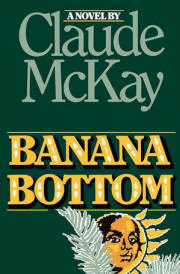
Claude McKay, Banana Bottom, and Ernest Gaines

It's well known that African American writers did not influence Ernest J. Gaines during his formative years as a writer. Instead, authors such as Hemingway, Faulkner, Tolstoy, Turgenev, and Joyce did.  In 1975, Gaines did say, however, "Probably the only Black writer who has influenced my work in Zora Neale Hurston" (Carter 85). Gaines does not mention a specific text by Hurston, in the 1975 interview or in later interviews. So, I cannot say with certainty what Hurston text influenced him. It must be remembered that Hurston's work fell out of favor during her lifetime and it wasn't until the early 1970s that Alice Walker and others resurrected her. What fascinates me is the fact that Hurston served as an influence. This can be seen, of course, in Gaines' use of dialect. However, I am not interested in Hurston for this post. Instead,  I am interested in Claude McKay.

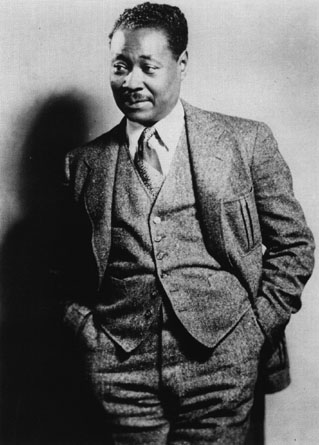
Both McKay and Hurston were major figures during the Harlem Renaissance. McKay, a Jamaican born author, wrote the famous poem "If We Must Die" in response to the Red Summer of 1919. He also wrote Home to Harlem (1928), a picaresque novel that sees Jake, an African American soldier who deserts the Army during World War I, finding his way in the world, both abroad and in the United States. Gary Holcomb directly links McKay's novel with Hemingway's The Sun Also Rises (1926), arguing that the novel, instead of being a work that would cause DuBois to take a bath after reading it, is "a rewriting of the white author's art for black transnational purpose" (136). After writing Home to Harlem and Banjo (1929), both of which deal with the big city in the United States, McKay wrote Banana Bottom (1933), a novel that focuses on Bita Plant and her life and that of the community in Jamaica  around the turn of the twentieth century.

Reading Banana Bottom, I could not help but think about Gaines and what may have been different if he read a work like this during his formative years. Just as Toomer could have affected Gaines' style indirectly through Hemingway, McKay's possibly did as well through Hurston. John Lowe points out the similarities between McKay's novel and Hurston's Their Eyes Were Watching God (1937) which she wrote while in the Caribbean. That discussion, however, is for another day. Here, I do not want to speculate on what would have happened if Gaines read McKay's novel early on, but I do want to point out the similarities between Banana Bottom and Gaines' work. As discussed in earlier blog posts, Gaines sought out books about peasants and peasantry when he entered the library in 1948. He found those books, but he didn't find "his" people in those books. Instead, he found European peasants and American whites. That is partly what inspired him to write.

McKay's novel deals with the peasantry in Jamaica, and it also contains the person who leaves, becomes educated, and returns to the community. Bita, after being "raped" at age twelve, gets supported by the local missionaries and sent to school in England. There, she becomes "educated" and returns to Jamaica, and Banana Bottom, about seven years later. The novel partly focuses on her navigating the "civilized" world of the white Europeans and the "native" world of her own community in Banana Bottom. In this way, Bita can be seen in relation to characters like Jackson and Grant in Gaines' works.

Apart from the central narrative of the novel that focuses on Bita, descriptions of the peasantry and more specifically conflicts between the local community and immigrants from India and China along with a migration of workers away from Jamaica to Panama for better opportunities appear. After the hurricane near the end of the novel, some of the Negro workers who had a large pay day clearing debris and wreckage took their money to Panama to make more working on the canal. Along with some of the workers leaving, the community "redoubled and grew in bitterness against the immigration of Chinese and the importation of Indian coolie labor" (294). This is only one example of the conflicting groups in the novel. The immigrants do not appear as characters like the Cajuns do in Gaines; however, they are present and take labor and wages away from the "Negro" workers.       

This is just a brief discussion of McKay's novel and some similarities to Gaines' work. For a longer discussion, make sure you leave a comment below.

Carter, Tom. "Ernest Gaines." Conversations With Ernest Gaines. Ed. John Lowe. Jackson: University of Mississippi Press, 1995. 80-85. Print.
Holcomb, Gary. "Hemingway and McKay, Race and Nation." Hemingway and the Black Renaissance. Eds. Gary Edward Holcomb and Charles Scruggs. Columbus: The Ohio State University Press, 2012. 133-150. Print.
McKay, Claude. Banana Bottom. New York: Harcourt Brace Jovanovich, Inc., 1961. Print.