Showing posts with label a gathering of old men. Show all posts

Thursday, June 18, 2015

Gaines and Visual Art: Depicting Social Landscapes in "A Gathering of Old Men"

Today's blog post comes to us from the Ernest J. Gaines Center's Summer Research Fellow from Cal State LA Katharine Henry. Her previous post, "'Deep in You:' Encountering Gaines," was the June 2, 2015 entry.  In today's post, she speaks Gaines's reference to Pieter Brueghel in A Gathering of Old Men. For further information on Gaines and visual art, see our post on Gaines and Van Gogh from June 5, 2014.  

In Jeanie Blake’s 1982 interview with Ernest J. Gaines, the author describes writing the massacre scene in The Autobiography of Miss Jane Pittman as “a [Pieter] Brueghel painting scene, a very violent scene” (141). One year later, A Gathering of Old Men is published and much of the novel’s violence is psychological with physical abuse chronicled after the fact. Marshall plantation’s brutal Cajun farmer, Beau Boutan, is shot before the novel begins. Once his younger brother, star LSU quarterback Gil Boutan, learns of his death, Gil’s close friend and fellow athlete, Sully, drives them to the crime scene where eighteen old black men with shotguns await the Boutan family patriarch, Fix, to take swift revenge. Sully describes the scene of these men gathered in Mathu’s yard as surreal, “Something like looking at a Brueghel painting. One of these real weird, weird Brueghels” (Gaines 118). Where Gaines aims for “the reader to hear the sounds of people being clubbed to death, to hear how the small animals and birds leave” (Blake 141) in The Autobiography of Miss Jane Pittman, Bruegel is useful for thinking how the old men gathered in Gaines’s subsequent novel commemorate their silencing and vocalize an alternative communal narrative of survival and transcendence.  

The Brueghel family was talented, spawning four generations of Flemish painters that began with the most famous, Pieter Bruegel the Elder. This eldest Brueghel, who later changed his name to Bruegel, produced art in the 16th century, crafting bizarre, masterful landscapes of ordinary peasant life. The Fight Between Carnival and Lent (1559) and The Wine of St. Martin’s Day (1565-1568) are two oil paintings that encapsulate his fascination with mass gatherings of people. The crowding of people and their small scale conveys the public as a chaotic, while coherent, organic machine akin to an ant colony. Musicians, nuns, upper class men, bakers, old and young alike, the impoverished and the disabled all pursue their individual missions on Bruegel’s canvases. The disorder of these gatherings creates a whole, complete vision of European society during the Renaissance. Four centuries later, Gaines’s old men with “Cataracts. Hardly any teeth. Arthritic. Old men. Old black men…Who have been hurt…Tired old men trying hard to hold up their heads” are not the clamored folk of Bruegel’s artworks, but their contradictory testimonies explaining why and how they killed Beau, similarly bolster their collective strength (Gaines 137). Each confession while not the “real” story the sheriff seeks, is just as true, adding a layer to the oral patchwork of American history from the post-emancipation to the post-Civil Rights movement eras.

Netherlandish Proverbs
In Netherlandish Proverbs (1559), Bruegel illustrates his theory of how private and public life continually melt into one another. No edifice, home or barn is safe from his paintbrush, each has an opening, porous to voyeurs and any figures, human or animal, that climbs in through every window and squeezes out from every crevice. Animals and humans dine alongside each other; the pastoral and urbanized blend smoothly. In the plantation quarters, private and public life are equally indistinguishable.  Cherry, who reflects upon the community cemetery, clearly articulates this, “Back there when I was growing up, people didn’t even mark the graves…They had all come from the same place, they had mixed together when they was alive, so what’s the difference if they mixed together now?” (Gaines 44)

Bruegel’s Fall of Icarus recasts the focus away from its mythic, epic title character in favor of the simple farmer and shepherd. These pastoral figures grace the foreground of the composition while Icarus is nearly lost from the painting, were it not for two nearly imperceptible legs splashing humorously in the water. Icarus’s fate is not a dramatic descent from the heavens but a humorous flop into the ocean where he is relegated to a miniature figure and appears to have sooner fallen off the nearby ship than to have fallen from the sky. While Bruegel selects a classical tale for his painting, his composition subverts the mythological narrative to validate human labor and harmony with nature as a worthier existence than a prideful rebellion against nature. In Gaines’s novel, the land is at the center of the community’s sense of identity and those who work it with their bodies, rather than with tractors, better recognize its value as a living organism all its own, not distinct from their human community. Johnny Paul declares he killed Beau because, “I’m the last one left…I just didn’t do it for my own people. I did it for every last one back there under them trees. And I did it for every four-o’clock, every rosebush, every palm-of-Christian ever growed on this place” (Gaines 92). Johnny Paul upholds the trees, plants, flowers, the dead and the living as equals to himself, worth his protection and self-sacrifice. Mapes, the white sheriff and witness to the gathering, is not the only audience for their testimony. Yank “wasn’t talking to us now. He was thinking back, back when he was a younger man,” Coot “was over by the garden fence, looking down the quarters toward the fields,” and Charlie is talking “Not to Mapes, not to us, but to himself” (Gaines 98, 103, 188). Johnny Paul also “wasn’t looking at Mapes, he was looking toward the tractor and the trailers of cane out there in the road” narrating to the land what it has already seen and knows (Gaines 88). His love letter to the land expresses that there is no distinction between the human and natural world and reaches its most intimate gentleness in his claim that he killed Beau, ‘To protect them little flowers. But they ain’t here no more’ (Gaines 90).

The Fall of Icarus
Like Johnny Paul, Yank ‘ain’t thinking ‘bout no progress’ as Mapes and Beau see it, but about how “progress” has lead to regression for blacks (Gaines 99). Johnny Paul most strongly identifies the limits of white knowledge and authority in his simple, powerful statement: ‘No, you don’t see’ (Gaines 88). This moment is the community’s sit-in, their demonstration in a time and place where the Civil Rights movement seems to have never touched fifteen years later—there are no references in the novel to the movement other than local bar owner Tee-Jack’s brief dismissal of “all that desegregation crap” (Gaines 152). The men do not march to a “Whites only” water fountain as one of Jimmy’s protestors does in The Autobiography of Miss Jane Pittman but stand their ground for the younger, vulnerable, fearful men they used to be and for the old men that they are now. Uncle Billy, Gable, Mathu, Dirty Red, Johnny Paul, Yank, Tucker, Coot and others share stories of endurance that challenge how the law and the Old South—via Mapes and Candy, respectively—have viewed them as weeds.

Preceding Sully’s parallel of the gathering of old men to a Bruegel painting, he compares it to “that old TV play Twilight Zone…You would be driving through this little out-of-the-way town, and suddenly you would come upon a scene that you knew shouldn’t be there” (Gaines 118). There is a distinct bizarreness, perversion, and unnaturalness in Bruegel’s paintings—pigs carry knives, foxes sit at the dinner table ready to eat with a bib around their necks, human limbs peak out the crevice of one edifice while the rest of their bodies remain cloistered, eggs walk on tiny feet. The strangeness that Sully witnesses and connects to Bruegel is a conception of black self-defense as a foreign notion, which Mat echoes: ‘Anytime we say we go’n stand up for something, they say we crazy’ (Gaines 37). Akin to Bruegel’s figures who sprawl in every direction in constant movement, against the classical impulse towards order, the old men disband from the orderly and oppressive rules and reassemble into a community of their own making, not Candy’s army but a self-regenerative, dignified, self-sustaining community that boldly claims, as Charlie does, ‘I’m a man’ (Gaines 187).


Blake, Jeanie. “Interview with Ernest Gaines.” Conversations with Ernest Gaines. Ed. John
Lowe. Jackson: University of Mississippi Press, 1995. 137-148. Print.
Gaines, Ernest J. A Gathering of Old Men. New York: Vintage, 1992. Print.

Thursday, June 4, 2015

Gaines's "In My Father's House" and the Changing Times

Unfortunately, Gaines's 1978 novel In My Father's House is not one of his works that gets read very often in the classroom. In light of recent events throughout our country from Ferguson to Baltimore, In My Father's House should be read with an eye reflecting back on what happened during the Civil Rights Movement and with an eye towards what has occurred since then. The novel focuses on the "generational gaps" between fathers and sons created by the legacy of slavery, Jim Crow, and racial oppression in the United States over that past four hundred years. This is something Gaines mentions throughout his oeuvre, and it shows up in A Lesson Before Dying when Matthew Antoine talks to Grant about teaching the children in the quarters: "You'll see that it'll take more than five and a half months to wipe away--peel--scrape away the blanket of ignorance that has been plastered and replastered over those brains in the past 300 years" (64).

In My Father's House begin with Etienne/Robert X returning to St. Adrienne to confront his absent father turned Civil Rights leader Philip Martin. Initially, the narrative focuses on the mysterious character of Etienne who arrives in town on a rainy night during the winter. Once there, his behavior causes the community to question who he is, why he is there, and why he acts the way he does. They find out that his appearance in St. Adrienne has to do with Philip Martin. Martin is Etienne's father, in name only. Etienne comes to St. Adrienne to kill Martin because he feels that Martin has neglected him, his siblings, and his mother. After this revelation, the narrative shifts to focus on Martin and his struggles to mend the gap between Etienne and himself as he struggles to confront his past and maintain his leadership of the movement in St. Adrienne. While this is only a brief summary of the novel, it provides you with an indication of the novel's focus on mending the gaps created by the abominable institution of slavery in this country.

The novel shows, as does other post-Civil Rights novels by Gaines, that the strides made during the mid-twentieth century in regards to voting rights and other actions caused a shift in the forms of subjugation from legally sanctioned Jim Crow to other forms of containment. Billy, a young man that Martin picks up while driving around Baton Rouge, expresses these thoughts in his discussions with Martin. Billy explains that even though strides have been made in regards to Civil Rights things remain the same, if not worse. Speaking on this, he tells Martin,
Niggers can vote. Vote for what? Voting can't fill your belly when you hungry. Another nigger sit up there in the capital. Doing what? Another one go up to Washington. For what? They put another couple on television to broadcast news--them the changes you talking about? I'm talking about changes that keep white men from coming into South Baton Rouge and shooting down our people. If it happen, we pick up guns, we pick up torches, and we hit back. That's the changes I want to see. (163-164)
Billy embodies the feelings, I would argue, of the Black Power and Black Arts Movements. Even with strides in regards to things like voting rights, the situation remained the same. According to Billy, there may be some "token" African Americans in government and on television, but that does not accomplish anything according to Billy. He goes on to speak about the changes occurring in regards to agriculture and how those changes affect the people's relationship with the hegemonic system that works to keep them down. He says, "Go over all this place--empty fields, empty houses, empty roads. Where the people used to be--nothing. Machines. Every time they build another machine that takes work from the people, they hire another hundred cops to keep the people quiet" (168). Since they cannot work the land, the African American population Billy speaks of either left or remained struggled to find employment. While the sharecropping system worked to maintain control of the community, with that gone, what remained? For Billy, "cops" became the system's answer to maintaining "quiet."

Billy vocally espouses his beliefs, but in A Gathering of Old Men, the same ideas provide an undercurrent at the end of the novel. As the men wait at Marshall Plantation for Fix to arrive and lynch someone, the old men do not get the opportunity to stand up to him. Instead, they confront Luke Will, a new representation of racism and subjugation that contrasts with Gil and Cal in the novel. Discussing the anticlimactic nature of the novel, Gaines told Mary Ellen Doyle in 1983, "So Fix's kind of vigilante vengeance is dying out, but there will be the new Luke Will type. The Luke Wills are in the police department. Fix is seventy or eighty and can't shoot straight, but Luke will do it for him" (168-169). The "separate but equal" segregation of Fix and Jim Crow may not exist anymore, and because of this, Luke Will's form of subjugation does.

I could not help but think about recent events while reading In My Father's House, specifically when reading Billy and Philip's conversation in the car. Gaines's post-Civil Rights novels deals with these issues, sometimes subtly and sometimes overtly. In light of the incidents that have been occurring throughout the nation, we need to read Gaines in conversation with them because he provides us with insight into how the events in northern, urban cities affect people in southern, rural places like St. Raphael Parish. What are your thoughts? What are other aspects of Gaines are relevant to recent events? Share in the comments below and make sure you check out and add to the Baltimore Syllabus for resources regarding the events in Baltimore.

Doyle, Mary Ellen, S.C.N. "A MELUS Interview: Ernest J. Gaines--'Other Things to Write About.'" Conversations withe Ernest Gaines. Ed. John Lowe. Jackson: University of Mississippi Press, 1995. 149-171. Print.
Gaines, Ernest J. In My Father's House. New York: W.W. Norton & Company, 1978. Print.


Tuesday, January 6, 2015

Second Annual Ernest J. Gaines Summer Teaching Institute


Last June, the Ernest J. Gaines Center hosted the First Annual Ernest J. Gaines Summer Teaching Institute. Over the course of a week, teachers from around the area gathered to read and discuss Gaines' works. We also took the time to talk about how they could teach those works, and others, in their own classrooms. The center provided them with access to archival materials and articles that would help in this endeavor.

This summer, the center, in conjunction with the Louisiana Endowment for the Humanities (LEH), will host the Second Annual Ernest J. Gaines Summer Teaching Institute. The institute will be held June 8-June 12, 2015 from 8:00-12:00 each day. The main goal of the institute is to provide area educators with the opportunity to explore, research, and discuss works by Ernest J. Gaines while focusing on how to bring the information garnered from the institute back to their own classrooms. To accomplish this, the institute will involve lectures from Dr. Marcia Gaudet and Dr. Darrell Bourque. Dr. Gaudet served as the founding director of the Ernest J. Gaines Center from 2008-2012, and she has authored, co-authored, and edited numerous books and articles on the work and life of Ernest J. Gaines. Some of her works include "This Louisiana Thing that Drives Me":The Legacy of Ernest J. Gaines (2009). Mozart and Leadbelly: Stories and Essays (2006), and Porch Talk with Ernest Gaines: Conversations on the Writer's Craft (1990). Dr. Bourque serves on the Ernest J. Gaines Center's Board of Directors, was the Louisiana Poet Laureate, and received the 2014 Louisiana Writer Award. He has written and presented on Gaines's work as well, including presentations on A Lesson before Dying and Catherine Carmier. Along with these, he has also written about Gaines and Modest Mussorgsky and on heroes in Gaines' fiction.  During the institute, Dr. Matthew Teutsch (Interim Director of the Ernest J. Gaines Center) and Jennifer Morrison (Graduate Assistant in the Ernest J. Gaines Center) will also provide insight and information about Gaines' work and the materials housed within the center.

The institute will involve numerous activities including lectures, discussions, use of archival materials, and most importantly the construction of materials for use in the classroom and in professional activities. The materials constructed by participants will also be available to other educators through the LEH. In conjunction with these items, participants will have the opportunity to visit New Roads, LA one afternoon. The trip will provide participants with the chance to see and to walk the landscape and the area that Gaines writes about in his fiction. These places include the cemetery and the church that play such a prominent role in Gaines' writing. Participants will examine four of Gaines' works: Bloodline, The Autobiography of Miss Jane Pittman, A Gathering of Old Men, and A Lesson before Dying.

The deadline to apply for the Second Annual Ernest J. Gaines Summer Teaching Institute is March 18, 2015. The institute will be limited to 10 participants, and each participant will receive a $200 stipend and a certificate showing their participation for professional development purposes. To apply, go the the Ernest J. Gaines Center's website and complete the application form. Participants will be notified by April 15, 2015 on the status of their status. Applicants must provide the following information:

  • name
  • school affiliation
  • phone number
  • email
  • a one page letter stating why you would like to participate in the institute, how you plan to incorporate the information learned into your classroom, and your previous experience (if any) with Gaines' work

For more information, contact Dr. Matthew Teutsch at (337)-482-1848 or at gainescenter@louisiana.edu


Tuesday, December 9, 2014

The Clerk and Social Distinctions on Cane River in Saxon's "Children of Strangers"

Yucca (Melrose) Plantation
Last post, I discussed Lyle Saxon's Children of Strangers (1937) and some of the themes that it has in common with Gaines and other texts. Here, I would like to continue that discussion briefly by bringing up some other aspects of the novel that are worth further investigation.

During Christmas, Mr. Randolph, after "the negroes" had all left the commissary, would take "five of the old mulatto men" with him into the back office and pour six glasses (122). The men would sit around, drink, and talk. Each new about the social distinctions in the area, so that is why they performed this yearly ritual in the privacy of the commissary's office. While Mr. Guy and the mulattoes drink in the back room, the clerk (who I believe is never named) begins to think about the relationships on Cane River. It is not clear where the clerk, often referred to as a hill-man, comes from. Since people refer to him as a hill-man, I assume he comes from North Louisiana, East Texas, or possibly Arkansas. The clerk becomes irritated with Mr. Randolph because the man chose to drink with "a damned race of bastards" instead of with him, a man of Mr. Randolph's own race (122). The clerk recalls that, where he is from, no one would tolerate a white man drinking with mulattoes or "negroes." Along with despising the idea that Mr. Randolph would drink with the "bastards," the clerk begins to think about the fact that the Randolphs, instead of treating him as an equal, treat him "just as a servant, like the niggers, in spite of the fact that he ate at the table with the white people" (122-123). Here the distinction between the clerk and the Randolphs is made clear. Instead of saying, "he ate at the table with them," the narrator specifies that the Randolphs are "white" and the clerk is not. Here, the term "white" constitutes a class distinction because the clerk does not own land and is below the white landowners like the Randolphs.

Immediately after this observation, the clerk starts to think about the distinctions on Cane River.
He couldn't understand these distinctions. There were really four classes on Cane River: Mr. Guy and his kind, and then his, the clerk's kind--he knew that Miss Adelaide considered him 'trash'--then there were the mulattoes who looked down upon the black people, and last, at the bottom of the heap, were the negroes themselves. . . And the negroes didn't seem to give a single damn! (123)
In Saxon's novel, the clerk occupies the position that the Cajuns occupy in Gaines' work. He is "white;" however, he is not white. Since he does not own land, and is considered "trash" by some, he cannot reside on the same level as the Randolphs or the Harrises. Instead, he must maintain a space that does not allow him much movement. What makes the clerk's predicament different from the Cajuns' in Gaines' Catherine Carmier is the fact that Mr. Randolph will drink with the mulattoes and he understands the distinctions, unlike the whites and their relationship with Raoul. In Carmier, Bud Grover provided the Cajuns with more land to farm because, as Madame Bayonne tells Jackson, "White is still white. . . [a]nd white still sticks with white" (73). On the other side, Cajuns still reside below aristocratic white landowners. In A Gathering of Old Men, Gil confronts Candy at Marshall Plantation, telling her, "You never liked any of us. Looking at us as if we're a breed below you. But we're not, Candy. We're all made of the same bone, the same blood, the same skin. Your folks had a break, mine didn't, that's all" (122). On this scene, Sister Mary Ellen Doyle asserts, "Gil is moved to turn on Candy and assert Cajun identity vis-à-vis upper-class whites," and in doing so. Gil realizes the equality he has with blacks and others (186). The clerk never challenges Mr. Randolph outright; instead, he only thinks about the inequalities that he experiences and lets them stew within him.

As I am writing these posts, I realize that there is more and more that could be said about Saxon's novel. I may do one more post about it next time because the clerk's actions in regards to the mulatto Nita and Henry Jack's relationship with Mr. Randolph's brother Paul are both worth examining. Until then, remember to leave a comment or question or below.    


Doyle, Mary Ellen. Voices from the Quarters: The Fiction of Ernest J. Gaines. Baton Rouge: LSU Press, 2002. Print.
Gaines, Ernest J. Catherine Carmier. New York: Vintage Books, 1993. Print.
Gaines, Ernest J. A Gathering of Old Men. New York: Vintage Books, 1984. Print.
Saxon, Lyle. Children of Strangers. New Orleans: Robert L. Crager & Co., 1948. Print.

Tuesday, October 7, 2014

Salt and Pepper in the Same Backfield

I apologize for not not following up the "James Meredith and Ole Miss" post with one on Gil and Cal from A Gathering of Old Men as I said I would. This post will focus on "Salt and Pepper" from Gaines' 1983 novel. Speaking about the violence and prejudice that appears in a novel set in the 1970s, Gaines says, in a 1991 interview, that racism and oppression still exist. He continues by using Gil and Cal as a symbol of progress and hope in the novel. His comments are worth quoting at length:
Another one of the themes running around this story is the idea of working together. The football players are very important in the novel. The only way you can really do things and the only way we are going to be Americans is that we have to work together. While many of the other characters in the novel are trapped in the past, the only ones who live in the present are Salt and Pepper.They're the ones living in the present and they're the ones who must make American work. We've got to block for each other and do all kinds of things to get to the goal. The football players are a symbol for how we must do this together. (Saeta and Skinner 250)
While Gil and Cal represent progress, Cal appears in the novel only once. As Gil prepares to leave LSU after getting word of his brother's murder, Cal tries to console Gil and tries to figure out what happened. At this moment, Gil turns his anger upon Cal: "Then suddenly [Gil] just turned against Cal. Out of the blue, he looked at Cal like he suddenly hated him. It surprised the hell out of both me [Sully] and Cal" (113). Gil leaves, and all Cal can do is just stand "there looking hurt" (114). After this encounter, Cal does not enter the novel again, except as a character removed from the action.

Ultimately, while Gil and Cal represent progress, there is something sort of unsettling about Gil and his role in the groundbreaking duo of "Salt and Pepper." When speaking with his father Fix, Gil continues to intone that if the family does anything to retaliate against the murder of Beau it will hurt his chances of becoming an All American. Here, it feels like Gil's dreams and desires supersede his family as well as Cal.However, this is all part of Gil's awakening, as Sister Mary Ellen Doyle says, because even after Gil rejects Cal and "has accepted rejection himself can he begin fully to see that what he does on the football field has wider implications than his own fame and glory" (184). Russ, the deputy who Mapes sends to Fix's house to keep him and his men there, says as much to Gil.

Upon leaving, Gil tries to decide whether or not he should play in the game against Ole Miss. Russ stops him and convinces him that he should, telling Gil, "Tomorrow you can do something for yourself, and for all the rest of us" (150). Russ begins by saying what Gil can do for himself then he moves on to what he can do for the country and for the next generation of Cajuns in South Louisiana. Russ tells Gil that millions of people will see the game on TV, and most of them will be pulling against LSU because "Salt and Pepper" are in the same backfield; however, that makes Gil and Cal that much more important. Gil doesn't respond to this argument, and Russ move on to argue how Gil can help his family: "You want to do something for your dead brother? Do something for his son's future--play in that game tomorrow" (151). Gil then asks about how this help Fix, not realizing that Fix possibly can't be helped. Russ concludes by reinforcing that Gil can help Tee-Beau, the country, and himself by playing in the game.

There is more to Gil in the novel, but this provides a good starting point for discussing not just Gil's role but also the role of sports in the novel. Football, and other sports, serves as a tool that bring together social change. Just take a look at Jim Brown for an example of this in the NFL or Jerry LeVias at SMU (a video of him is below). In the comments, let's continue this conversation. How do you see sports affecting social change? How do sports play into other novels, not necessarily those of Gaines or other African Americans?

Doyle, Mary Ellen. Voices from the Quarters. Baton Rouge: Louisiana State University Press, 2003. Print.
Gaines, Ernest J. A Gathering of Old Men. New York: Vintage Books, 1983. Print.
Saeta, Elsa and Izora Skinner. "Interview with Ernest Gaines." Conversations with Ernest Gaines. Ed. John Lowe. Jackson: University of Mississippi Press, 1995. 241-252. Print.


Thursday, October 2, 2014

"No, I won't let them harm my people."

Upon first reading A Gathering of Old Men, Candy presented a conundrum for me. At first, I wanted to appreciate her desire to protect Mathu from Mapes and the inevitable appearance of Fix and his men. However, her continued comments regarding Mathu and those gathered at Marshall Plantation caused me to have a different view of her. Speaking with Miss Merle early in the novel, Candy tries to remind her interlocutor that Fix has continuously caused problems for the African American community on Marshall Plantation. Candy tells Miss Merle that Janey can remind her about "what Fix has done to these people around here" (19). After telling Miss Merle this, Candy emphatically states, "I will not let Mapes or Fix harm my people" (emphasis added 19). Candy continues by exclaiming, "No, I won't let them harm my people. . . . I will protect my people. My daddy and all them before him did" (emphasis added 19). In the span of five sentences, Candy refers to Mathu and the others on Marshall Plantation as "her people."

Candy's phrase, "my people," struck me when I first encountered it. Even though slavery had ended close to 110 years before the events in the novel take place, the 1970s, Candy still sees Mathu and the others as "her people." She "must" protect them, making sure that neither Fix nor Mapes harms them. Through this stance, Candy maintains a position of authority that becomes reminiscent of slave owners who saw their slaves as property and of being incapable or protecting themselves. I am not saying that Candy is completely like a slave owner; however, her paternalistic stance towards Mathu and the others is worth interrogating. In fact, Gaines editor, Dorthea Oppenheimer, specifically asked Gaines about Candy's role in the novel. She wrote, "Candy: what's her role? She's the last of her line. She's an old fashioned type of slaveowner, although she thinks she's very modern and liberal. She finds out these men have minds of their own and doesn't like it."

Even at the end of the novel, after everything has happened, Candy still cannot let go of "her people." When the trial ends, she asks Mathu if he needs a ride home. He declines, saying that Clatoo is there with the truck and "he would go back with Clatoo and the rest of the people" (214). Candy waves to Mathu and the others then searches for Lou's hand, for comfort. When asked about this scene and whether or not Candy undergoes a "learning process" throughout the book, Gaines responds:
I really don't think she understood [why Mathu left with the people]. She knows she needs Lou for support; that's why she reaches for his hand when Mathu leaves. But Mathu's turned his back on her, and I don't think she knows why. Lou tells her in the car; that's why she slaps him, because she doesn't want to understand. In another draft, she gives a big speech, "When you needed medicine, who went to the store? When you went to the doctor, who took you? When you were hungry, who fed you? And they must all say, Yes, Candy did it. I cut that out, but I hope people can still get the feeling of her role. (Doyle 171)
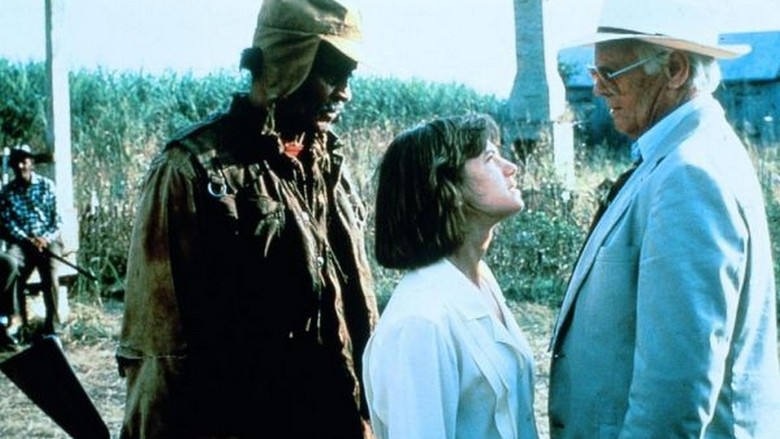
Holly Hunter as Candy in the film version
What is her role? Is she the "old fashioned type of slaveowner" that Oppenheimer mentions? Does she learn about herself and the community as Sister Mary Ellen Doyle suggests when she asked Gaines about Candy? Is she really progressive in her thoughts? These are all questions that should be explored because Candy provides an interesting type of character in A Gathering of Old Men, one that feels like she is helping but is ultimately hindering the progress of those she "loves and cares for." What do you think? As usual, add your own comments below.

Doyle, Mary Ellen, S.C.N. "A MELUS Interview: Ernest J. Gaines--'Other Things to Write About.'" Conversations withe Ernest Gaines. Ed. John Lowe. Jackson: University of Mississippi Press, 1995. 149-171. Print.
Gaines, Ernest J. A Gathering of Old Men. New York: Vintage Books, 1984. Print.
       

Tuesday, September 30, 2014

James Meredith and Ole Miss

Why Ole Miss, why not Tennessee, Florida, or another SEC team? This is the question I thought about when reading about Gil and Cal in Gaines' A Gathering of Old Men (1983). Of course, you have the longstanding rivalry between the teams, dating back to 1894. The most famous game between the two occurred on Halloween night in 1959 when #1 LSU squared off against #3 Ole Miss in Baton Rouge. That game produced one of the most famous plays in LSU football history, Billy Cannon's 89 yd punt return that gave the Tigers the lead. (The video of Cannon's return is above.)

Three years after this game, in 1962, James Meredith became the first African American to integrate the University of Mississippi. To put this in context, Brown v. Board occurred in 1954, the Little Rock Nine integrated Little Rock High School in 1957, and Ruby Bridges integrated the New Orleans Public Schools in 1960. As a side note, months after the Brown v. Board decision Southwest Louisiana Institute (now UL Lafayette) became the first all-white university in the Deep South to integrate by allowing African Americans to register for classes.

What does all of this information have to do with Gaines? Why is Ole Miss important in A Gathering of Old Men? In the original draft, entitled A Revenge of Old Men, LSU plays Arkansas instead of Ole Miss. However, in the published novel, the Tigers are preparing to take on the Rebels. This cannot be a coincidence, and it goes deeper than just the on-the-field rivalry between the teams. Over the years, Gaines has spoken about the inspiration that Meredith provided. In a speech housed in the archives, Gaines speaks on Meredith:
All summer long I thought I would go to Mexico. But something happened at the University of Mississippi in September of ‘62 that changed my mind. I kept thinking and thinking about this brave, very brave man [Jim Meredith]. And I told myself then that in order for me to ever write that book [The Autobiography of Miss Jane Pittman] I would have to take the same chances in Louisiana that Jim Meredith was taking in going to Mississippi (ca. 1969). 
Ole Miss, then, becomes more than just LSU's rival in A Gathering of Old Men, it becomes a reference to the tumultuous events that centered around Meredith's integration of the university. Meredith's enrollment at Ole Miss sparked numerous responses, including a riot the day before his first scheduled class. During the riot, two were killed and numerous people were wounded. For a great documentary on Meredith and the 1962 Ole Miss football, which went undefeated, watch ESPN's 30 for 30 Ghosts of Ole Miss. The video is below.

Gil and Cal, working together as "Salt and Pepper" in the LSU backfield, represent what can be accomplished when individuals do decide to cooperate, work together, and respect one another. Their mere presence, which will be discussed in more detail in the next post, provides hope for the future as Russ intones in the novel. What do you think about this? As always, leave your comments below.

Tomorrow night the film version of A Gathering of Old Men will be shown at the Lafayette Public Library's South Regional Branch. Make plans to join us there.


Tuesday, August 19, 2014

The Specter of Lynching

E. Simms Campbell's I Passed Along This Way
for An Art Commentary on Lynching
Jenny Woodley, in Art for Equality: The NAACP's Cultural Campaign for Civil Rights, talks about how the NAACP used literature, drama, visual arts, and other cultural forms to combat racism and to counter white views of African Americans. Part of her discussion involves the organization's fight against lynching during the first part of the twentieth century. She discusses the use of drama, such as Angelina Weld Grimké's Rachel (1916), Alice Dunbar-Nelson's Mine Eyes Have Seen (1918), and Georgia Douglas Johnson's A Sunday Morning in the South (1925). Woodley concludes her chapter on the NAACP's cultural response to lynching with a discussion of the 1935 art exhibition An Art Commentary on Lynching. The exhibition and writing worked to counteract the dominant white lynch narrative by providing a voice, name, face, and life to the victim. While reading this chapter, I could not help but think about Gaines and other African American authors. This post will not be an in depth discussion of lynching and mob violence in Gaines' work or other authors; however, it will provide an overview and some insight into instances of mob violence in some of Gaines' novels.

Gaines has said "[a] lynch mob is a lynch mob--you don't have to wear a sheet or live in East Texas or Mississippi or Louisiana or Alabama--you can live in New York, you can be in police blues, or you can be a gang of kids and have someone accidentally go into the wrong neighborhood at the wrong time" (Saeta and Skinner 250). Gaines' description here can be seen in Catherine Carmier when Jackson informs Madame Bayonne that the North is nothing like he expected it to be. "There's no truth," he tells her, "They don't come dressed in sheets with ropes. But there's no truth" in the stories people have told him about the North (81). One needs to only think about Claude McKay's Home to Harlem, Richard Wright's Native Son, Chester Himes' If He Hollers Let Him Go,  Jess Mowry's Way Past Cool, or countless other novels. In much of Gaines' work, the lynching or mob violence does not include a rope and fire or even the act being performed in the present. Usually, the act is retold as a past experience or as something being read in a paper or overheard. This diminishes the spectacle of the act and adds feeling and sympathy for those who have lived through it.  

Coming across a hunter on her way to Ohio with Ned, Miss Jane begins to talk with him about the death of Big Laura and other hardships the travelers have endured. The hunter, then tells Ned and Miss Jane about a lynching victim he saw.
I told the hunter about the Secesh who had killed Ned's mama and the other people. He told me he had seen some of the Secesh handywork, too. Earlier that same day he had cut a man down and buried him that the Secesh had hung. After hanging him they had gashed out his entrails. (46)
After the hunter tells Miss Jane about the man, she asks why the "Secesh" had hung the man. The hunter simply replies, "Lesson to other niggers" (47). This scene takes up no more than one quarter of a page within the novel, but it paints a disturbing picture of a African American man, after the Civil War, being cut down from a tree as his entrails gather on the ground.This act adheres to the image of a lynching as someone being strung up to a tree and hung. However, later in the novel, two other instances of what we could call lynchings occur. These are Ned's and Jimmy's assassinations. Both die because they are making the whites scared, not because they will violate white women, but because they will ignite a fire within the African American community. We hear about these events secondhand, and we see how Miss Jane and the community react to each of them.    

Gaines does not pepper his works with images of lynchings. Instead, he subtly places them in the background. Another example occurs in In My Father's House when Phillip talks about reading a newspaper article about "a black boy" frozen in a ditch with  no papers on him.While it is not a mob lynching as the one described in The Autobiography of Miss Jane Pittman, it is a mysterious death of a young African American male that could have been caused by mob violence. This specter of mob violence permeates the novel. When Phillip picks up Billy and talks with him later in the novel, Billy comments on the act of lynching, saying, "Even when they lynch a nigger they have to burn him too" (168). Again, these images appear in the background. The foreground centers on the relationship between Phillip and his son as well as with the rest of the community.

While A Gathering of Old Men takes place under the fear of a lynch mob riding towards Marshall Plantation, it does not occur. Again, instances of mob violence against African Americans occur in the novel, but they appear in the form of retellings, an oral experience that works to reconstruct the act by naming the victims who may have been unnamed in the act of the lynching itself and its reports and by providing the story of the experience. Gable tells the story of his sixteen year old son who died in the electric chair "on the word of a poor white trash" who claimed the boy raped her, even though everyone knew her reputation with black and white men alike (101). At the execution, the officials informed Gable that the family could take the boy after he died, retrieving his body  at the back door. The chair failed to work, and the officials had to call in a chair from Baton Rouge. After the boy's death, Gable says that "them white folks walked out of that room like they was leaving a card game. They wasn't even talking about it. It wasn't worth talking about" (102).The death of Gable's son can be seen as a type of lynching because it contains the whites' fears of African American men violating white women and the use of mob violence to help protect the sanctity of white womanhood.

If interested in looking at some of the plays mentioned above, go check out Black Theatre USA vol. 1.  To see other responses to lynching, look at Ida B. Wells' work. For stories on lynching, look at Richard Wright's Uncle Tom's Children, Ralph Ellison's "A Party Down at the Square," and James Baldwin's "Going to Meet the Man," "Sonny's Blues," and Blues for Mister Charlie. The image to the right is Reginald Marsh's This Is Her First Lynching which appeared at the 1935 An Art Commentary on Lynching. I placed it here because it reminds me of Baldwin's "Going to Meet the Man" which is a story about a young white boy's first lynching. There are other works that could be mentioned, but these were some of the first that came to mind when I read Woodley's chapter on the NAACP's cultural response to lynching. The video  below is Billie Holiday singing "Strange Fruit."

This post could go on and on, eventually getting away from me. So, instead of allowing it to do that, let's carry on this discussion in the comments.

Gaines, Ernest J. The Autobiography of Miss Jane Pittman. New York: Bantam Books, 1972. Print.
Gaines, Ernest J. Catherine Carmier. New York: Vintage Books, 1993. Print.
Gaines, Ernest J. In My Father's House. New York: Vintage Books, 1992. Print.
Gaines, Ernest J. A Gathering of Old Men. New York: Vintage Books, 1984. Print.
Saeta, Elsa and Izora Skinner. "Interview with Ernest Gaines." Conversations with Ernest Gaines. Ed. John Lowe. Jackson: University of Mississippi Press, 1995. 241-252. Print.


Thursday, July 31, 2014

The Changing Land in Catherine Carmier

From the very beginning of Catherine Carmier (1964), technological advancements and their effects on the rural African American community can be seen. When Brother comes to town in order to pick up Jackson from the bus station, he begins to speak with two Cajuns about Jackson's return. During their conversation, François and Paul mention that they are waiting on their new tractors. François informs Brother that everyone has new tractors now and that with them they could complete their work very  quickly: "Knock it all out in one day like that"  (6). Later, in chapter twenty-nine, the narrator, discussing Raoul's  fears, mentions that the technological advancements in agriculture, specifically tractors scare him. Being "the only colored farmer” left holding out against the Cajuns, “[h]e was going to give them hell before their tractors plowed dirt in his face” (134).


The land, and the changing of the land, plays a prominent role within Catherine Carmier. The introduction of tractors and other machinery only helps to exacerbate the already dwindling farm area available to the African American community within the novel. When talking about why Bud Grover gave the Cajuns the best farm land even though they are a tier below the whites in the social hierarchy, Madame Bayonne informs Jackson, “White is still white” (73). Continuing, she informs Jackson that Bud Grover gave the Cajuns the best farm land over the “Negroes” because they produced more crop. They can do this partly because they have the best land but also because they work together. These advantages allowed them to produce more crops which allowed them “to buy more equipment” that would allow them to work the land even faster, thus producing more crops for Bud Grover (74). The increase of Cajun land, amongst other factors, led to a change within the community of the Quarters. As Jackson and Madame Bayonne walk through the corn fields, Jackson notices that the Washington’s used to live in a space where crops now reside. Madame Bayonne tells him that they moved to Baton Rouge and the Cajuns own the land now. She goes on to tell Jackson, “Houses don’t sit between houses any more; now they sit between fields” (77). The Washingtons moved to Baton Rouge, others moved to New Orleans or the North. Still others joined the military and left. In fact, some of Gaines’ friends tried to convince him to stay in the military instead of getting out and becoming a writer.

All of these factors play in to the deterioration of community and the changing landscape. In A Gathering of Old Men (1983), all that are left on Marshall Plantation are the old and the very young. Gaines discusses this very fact in a short speech about the novel that can be found in the archives. As I’ve mentioned in a previous post, Gaines sees change as inevitable. It will occur; however, there are certain things that he truly wants to preserve on the land. One of these is the cemetery where his ancestors are buried. In A Gathering of Old Men, the fear of the cemetery being plowed under becomes a serious threat. Telling Mapes why he decided to stand, Johnny Paul and the other men begin to talk about the past. He informs Mapes that he can’t see anything but the weeds behind the plantation, but Johnny Paul and the others see much more. They see their lives, their community. Part of that community is the graveyard. Johnny Paul tells Mapes, “I did it for them back there under them trees. I did it ‘cause that tractor is getting closer and closer to that graveyard, and I was scared if I didn’t do it, one day that tractor was go’n come in there and plow up them graves, getting rid of all proof that we ever was” (92). The physical proof of the Washingtons and other families moving in Catherine Carmier has disappeared. All that remains are the memories of Jackson, Madame Bayonne, and the others in the Quarters. The cemetery remains a physical representation of the people who lived on and worked the land. It is a tangible place that can be seen and serves as a locus for the shared memory of the community.

This is only one theme from Catherine Carmier that continually appears in Gaines’ work. I have not even scratched the surface of this topic in Catherine Carmier, let alone in Gaines’ oeuvre. Catherine Carmier explores, as Thadious M. Davis puts it, “the dichotomy between condition of modern plantation life and the values inherent within the people living in the plantation system” (276). This dichotomy becomes apparent when thinking about the ways that the landscape has changed since Jackson left for California. In the next post, I will talk about the teacher figures that appear in Gaines’ work. Jackson serves as introductions to these characters.         

Davis, Thadious M. Southscapes: Geographies of Race, Region, & Literature. Chapel Hill: University of North Carolina Press, 2011. Print. 
Gaines, Ernest J. Catherine Carmier. New York: Vintage Books, 1993. Print. 
Gaines, Ernest J. A Gathering of Old Men. New York: Vintage Books, 1983. Print.  

Thursday, May 29, 2014

The Cemetery and the Church

Inside of church
In the previous post, I talked about Gaines' relationship to the land where he grew up. That land appears in all of his fiction from his first novel Catherine Carmier all the way through A Lesson before Dying. Talking about the land with Marcia Gaudet and Carl Wotton even further, Gaines says, "[T]his land is constantly changing;" however, he does not keep up with that change since "[his] people no longer live there" (74). Even though he does not keep up with the change, he adamantly states that anything can happen to the land "[a]s long as they don't destroy the cemetery where my people are buried, or the church they worshiped in" (74). These specific places, the cemetery and the church, appear again and again in Gaines' work in relation to the changing landscape. Gaines' respect for these places can be seen in his literature and his life. He has preserved the cemetery and he had the church where went to school moved to a spot directly behind his house.


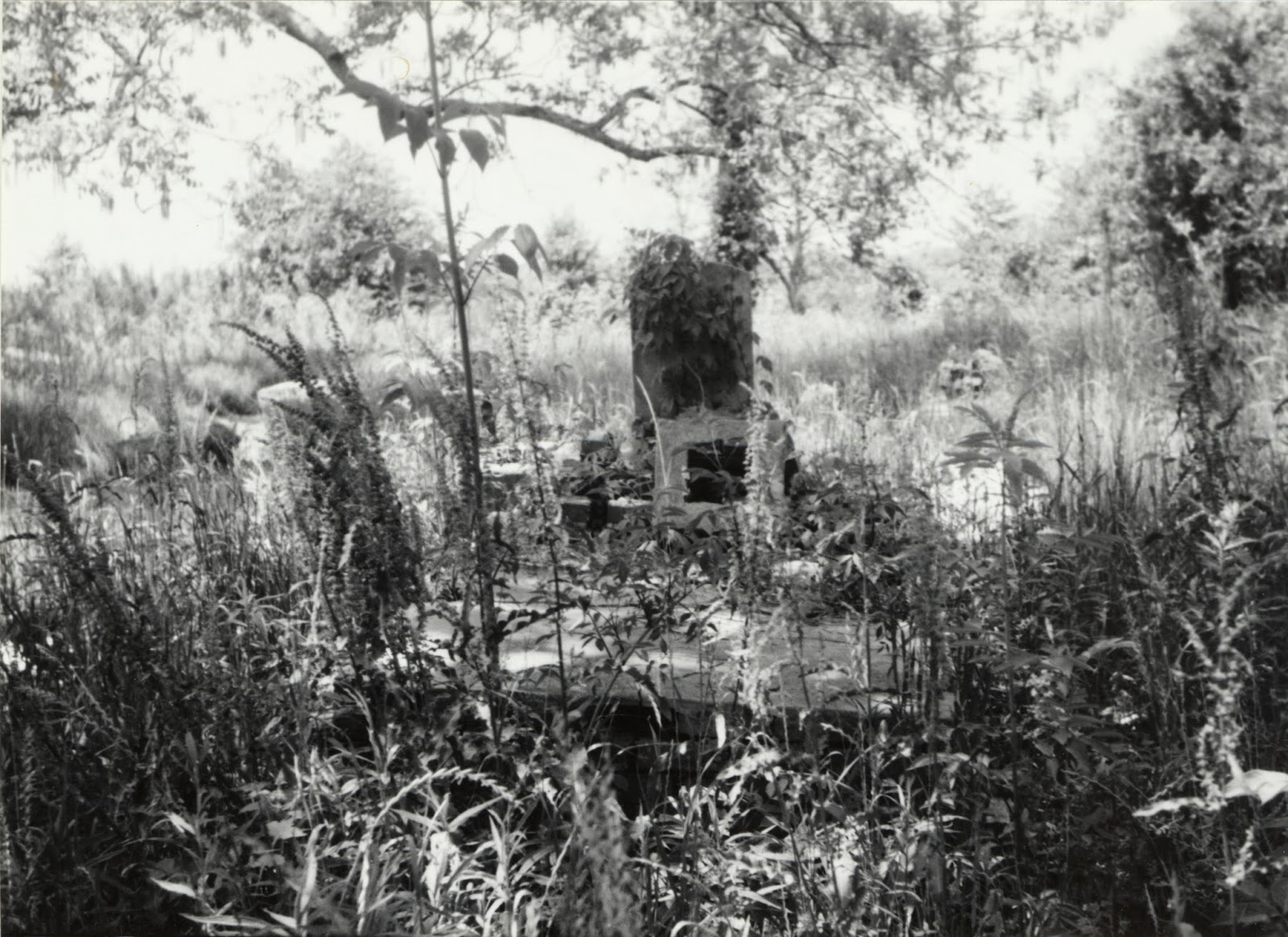
While walking through the quarters in chapter thirty-eight of Catherine Carmier, Jackson comes across the cemetery and the church. Jackson "looked through the fence at places where graves ought to be, or where he thought they had been. He could not see any graves for high weeds, and he was not sure that he was looking in the right places" (191). Jackson inability to recognize the graves causes him to feel empty. Unlike Jackson, the men that gather at Marshall Plantation in A Gathering of Old Men visit the cemetery before they arrive on the gallery to stand beside Mathu against Fix and his men. Cherry describes the cemetery by saying, "You had to walk in grass knee-high to reach some of the graves" (45). The area, to Jackson and to Cherry, is overgrown and is in the process of erasing any indication of the people who once lived and worked on the land. Later in the novel, Johnny Paul confronts Mapes about why he and the other men chose to stand:
I did it for them back there under them trees. I did it 'cause that tractor is getting closer and closer to that graveyard, and I was scared if I didn't do it, one day that tractor was go'n come in there and plow up them graves, getting rid of all proof that we ever was. (93) 
Cemetery pre-cleanup
Johnny Paul talks about the cemetery and about the human machinations that threaten its very existence. The white land owners don't care about the cemetery and they bring in tractors and other farming machines to get the most out of the land for the cheapest expenditures. The increased use of tractors and other farm machines is another constant threat to the land and its people that Gaines brings up throughout his oeuvre: Catherine Carmier, Bloodline, The Autobiography of Miss Jane Pittman, In My Father's House, and A Gathering of Old Men.


The church where Gaines went to school and worshiped that he mentions in the quote in above appears in Catherine Carmier as well. After visiting the cemetery, Jackson walks to the church. He begins to reminisce about how large the church used to feel and how things have changed since he went to school there. He thinks about how far the pews used to feel from the table in the front of the church. He even recalls the whippings he received from Madame Bayonne. Walking around the perimeter, Jackson looks at the surrounding area and sees "[a] sugar-cane field came all the way up to the yard from the side and from the back" (192). Just as the fields encroach upon the cemetery in A Gathering of Old Men, they encroach upon the church.

These two spaces, the cemetery and the church, play an important role in Gaines' fiction of the quarters and Bayonne. In later blog posts, I will discuss the church and cemetery and other works.

Gaines, Ernest. Catherine Carmier. New York: Vintage Books, 1993. Print.

Gaines, Ernest. A Gathering of Old Men. New York: Vintage Books, 1984. Print.

Gaudet, Marcia and Carl Wooton. Porch Talk with Ernest Gaines: Conversations on the Writer's                 Craft. Baton Rouge: Louisiana State University Press, 1990. Print.


Tuesday, May 27, 2014

Ernest Gaines and the Land He Writes About

When I first read Ernest Gaines' A Gathering of Old Men around 2004 or 2005, I never thought I would have the opportunity, in such a short period of time, to work in the Ernest J. Gaines Center and to get to know the man and the land that he writes about. In the documentary above, John Callahan comments that all fiction contains about 99% reality from experiences, surroundings, people, etc. I could have gone my whole life reading Gaines' work without having any connection to them beyond the printed words on the page. While I would still, no doubt, find pleasure and inspiration in the texts, I would not have the opportunity to fully appreciate their importance. Walking the land that Gaines' invokes in his novels feels different than walking through the streets of New Orleans in the footsteps of Tennessee Williams, John Kenendy Toole, Kate Chopin, William Faulkner, and countless others. I do not get the same feeling walking those streets in the French Quarter as I do when I walk through the church, the cemetery, or the sugarcane fields that Gaines draws inspiration from when constructing the land around Bayonne. Millions of people walk those streets in New Orleans. How many walk those fields where Gaines grew up?

Gaines' connection to the land where he spent the first fifteen years of his life can be seen very strongly throughout his oeuvre. He tried to write about other areas; however, he always returned again and again to Louisiana. Speaking with John Lowe in 1994, Gaines said, "I've tried to write about my army experiences; I've tried to write about San Francisco, about Bohemian life and that sort of thing. But everything comes back to Louisiana" (298). Louisiana continually draws Gaines back in his writing. Earlier, talking with Marcia Guadet and Carl Wooton, Gaines said he has an attachment to the land where he grew up. He cares about the cemetery on the land where the people he knew and his ancestors are buried, some in unmarked graves. Talking about the quarters, Gaines said, "I suppose as children we loved the quarters. I mean we loved it more than the people who owned it loved it, but we were limited" because they did not own the land (75). This land draws him back because "that's where everything was for [him]" (75). 

All of this brings me back to the beginning of this post. Over the past few years, I have had the opportunity to walk upon the earth that Gaines walked during his formative years. I have had the opportunity to clean the cemetery where his ancestors lay and where he wants to be buried with the inscription "To Lie With Those Who Have No Marks" on his tombstone. The place, Riverlake Plantation, provided Gaines with the material he would write about he scoured the library in California to find his people and their voices in the books collected there. He created that voice and breathed life into it, allowing those who have no mark to speak for the world to hear. Riverlake Plantation also provided me, and more importantly my family, with the opportunity to never forget the past. My daughter has been able to help clean the cemetery every October for the past few years, and my son had the opportunity this year. Even though they are not old enough to understand the importance of what they are doing or where they are walking, I know that one day they will. They will understand that they helped, in some small way, to keep the memories of Gaines and his ancestors alive.


For a video of the annual cemetery cleaning go to CNN's website.

Gaudet, Marcia and Carl Wooten. Porch Talk withErnest Gaines: Conversations on the Writer’s Craft. Baton Rouge: Louisiana State University Press, 1990. Print. 
Lowe, John. "An Interview with Ernest Gaines." Conversations with Ernest Gaines. Ed. John Lowe. Jackson: University of Mississippi Press, 1995. 297-328. Print.