Showing posts with label catherine carmier. Show all posts

Thursday, March 26, 2015

"A Visitation of Spirits" and the Past

African American sharecropper and wife
grading tobacco in North Carolina (New York Public Library)
On Tuesday, I wrote about the idea of "the One" in Randall Kenan's A Visitation of Spirits and in the works of Ernest Gaines. Today, I want to briefly touch on another aspect of Kenan's novel that bears similarities to Gaines's work, specifically his descriptions and ruminations on the changing landscape and movement away from the past. There are numerous points in the narrative that focus on the changing land, but perhaps the most important is the conclusion of the book, Horace's confession and more importantly the section entitled "Requiem for Tobacco." As Thadious Davis notes, this section can be seen in relation to Gaines because "the nature of the rural and the farming communities is past, but it provides a space from which to understand the present" (333).

"Requiem for Tobacco" begins nostalgically, almost like a myth that was once true but as of now no longer exists.
You remember, though perhaps you don't, that once upon a time men harvested tobacco by hand. There was a time when folk were bound together in a community, as one, and helped one person this day and that day another, and another the next, to see that everyone got his tobacco crop in the barn each week, and that it was fired and cured and taken to a packhouse to be graded and eventually sent to market. But this was once upon a time. (254)
"Once upon a time," as Davis notes, carries with it a note of mythologizing the harvest. The phrase, in one form or another, appears twice in the paragraph above, once at the beginning and once at the end. Along with this phrase, there is also a focus on community. Looking to the past, the narrator points out that it "was a time when folk were bound together in community." Community plays a major role in Gaines's work, and in Kenan's novel, the community that "Requiem for Tobacco" recalls does not exist anymore. Instead, the community does not help one another out; in fact, it hinders the psychological growth of the presumed One, Horace.  

After speaking about the planting, harvesting, and drying of the tobacco. Men like Edgar Harris and George Pickett would plant and harvest the tobacco then bring it to the barn where the women would tie the tobacco together. Underneath the tin ceiling, time would fade away, problems would be solved, and the older women would "impart good and practical wisdom to younger girls" (256). All of this though, happened in the past. Over time, the land, and who cultivated it, changed. The encroachment of modernity upon the rural North Carolina community recalls the continued approach of mechanized farming in Catherine Carmier and A Gathering of Old Men.  Now, Edgar Harris lies in a grave somewhere and "George Pickett has leased his land and now drives a bus" (256). Pickett's land then became divided again, sold to someone who had a lot of land, "someone who is no one at all, but many in the name of one," a corporation like the one that harvests sugarcane in Attica Locke's The Cutting Season (256). Instead of hands doing the work, "the clacking metal and durable rubber of a harvester that needs no men, that picks the leaves, stores the leaves, slaps them into small bulk barns that looks like chicken coops that cure quicker, easier, cheaper" replaced the people in the fields (256-57). The increase in mechanized farming and corporations concerned more with profit margins than with people push the memories of Hiram Crum, Ada Mae Philips, Jess Stokes, Henry Perry, and Lena Wilson to the side, letting them drift in the wind like the dust kicked up by a laboring tractor.

"Requiem for Tobacco," and the novel, concludes with paragraph that laments the passing of time. Even though machines make farming "less torturous," they also erased the past. With the movement of modernity, the past becomes forgotten, only to be recalled when modernity causes us to feel more disoriented then ever from trying to keep up. That is when we turn to the rural, the pastoral, for an escape from the overwhelming onslaught. That should not be the only time. As the narrator concludes, "And it is good to remember that people were bound to" the process of growing tobacco "for too many forget" (257). This is what Gaines writes for. This is what Kenan's A Visitation of Spirits does. They cause us to remember, to look at the past and to recall how we made it to the present.

Wood Plank Road in Fayettville, NC (1984)
There are other scenes throughout the novel that deal with the changing land. Specifically, I am thinking about Jimmy, Ruth, and Zeke's drive to see Asa in the hospital. During the drive, Zeke begins to think about the past and how much things have changed. He contemplates the road between Fayettville and Wilmington. Zeke recalls when the road was nothing more than a "wood-plank" and a man would be better off "tak[ing] a train than drive a mule and cart all them seventy-so miles" (47). He continues by thinking that today people take cars, making the trip between the two town so much easier. They get in, start the car, then drive. People "[t]ake them for granted" (47). Zeke highlights the movement of time and the increased mechanization of the world, in this instance with the automobile.

What other instances in Kenan's novel highlight the changing times? Are there other instances that remind you of Gaines or other Southern authors? If so, what are they?    


Davis, Thadious M. Southscapes: Geographies of Race, Region, & Literature. Chapel Hill: University of North Carolina Press, 2011. Print.
Kenan, Randall. A Visitation of Spirits. New York: Grove Press, 1989. Print.

Thursday, January 22, 2015

In the Background of Chandler's "The Big Sleep"

Last post, I spoke about Raymond Chandler's The Big Sleep and class in the novel. Today, I want to briefly return to a subject that I explored in "'Idle White Rich' in Catherine Carmier;" in that post, I talk about the fleeting references in Gaines' novel to the white who own the land and who spend their time involved in leisure activities such as racing along the river in a speed boat. Gaines presents whites in the background of the novel. They are there, they exist, and they have an effect on the characters that populate Catherine Carmier. Likewise, Chandler, and other white American authors, populate their novels with African American, Mexican American, or other characters that appear only fleetingly throughout the text. The presence of these characters, as Toni Morrison argues, cannot be ignored. Morrison, in Playing in the Dark (1993), argues that "canonical American literature is free of, uninformed, and unshaped by the four-hundred-year-old presence of, first, Africans and then African-Americans in the United States" (5). by pushing "minority" groups to they margins of the texts, authors work, as Morrison continues, to define an "Americanness" that excludes those that appear only in passing. With that in mind, I want to look briefly at Chandler's novel and a couple of instances where those on the margins of American society during the 1930s appear, then disappear, while the white characters perform their duties.

When Philip Marlowe enters Eddie Mars' casino in chapter "twenty-two," he begins by describing the "Mexican orchestra" performing on stage. He states:
It was about ten-thirty when the little yellow-sashed Mexican orchestra got tired of playing a low-voiced, prettied-up rhumba that nobody was dancing to. The gourd player rubbed his finger tips together as if they were sore and got a cigarette into his mouth almost with the same movement. The other four, with a timed simultaneous stoop, reached under their chairs for glasses from which they sipped, smacking their lips and flashing their eyes. Tequila, their manner said. It was probably mineral water. The pretense was as wasted as the music. Nobody was looking at them. (135)
This brief passage contains an enormous amount of information, specifically within the final four tightly constructed sentences. The musicians play; however, no one in Mars' joint listens to them. To the patrons, the orchestra remains invisible, blending into the background. Likewise, when the performers take a drink from underneath their chairs, they present an image that the people gathered to gamble away their money expect to see, Mexicans drinking tequila. However, the musicians, according to Marlowe, due this only as facade. They probably only drink "mineral water," thus countering the stereotypes of the patrons who do not even pay any attention to them. The musicians occupy a space in the background, removed from the main plot of Chandler's novel.

Another instance of marginalized characters appearing in the novel, but not in a fully fleshed out manner occurs with the Sternwood's maid. As Marlowe meets with Vivian for the first time, she finishes her drink then rings a bell, calling a servant to come and pour her another drink. Marlowe describes the maid simply by appearance. Later, the butler provides her name: Mathilda.
A maid came into the room by a side door. She was a middle-aged woman with a long yellow gentle face, a long nose, no chin, large wet eyes. She looked like a nice old horse that had been turned out to pasture after long service. (18)
While it is not clear if the maid is African American, Asian American, or white, it is clear that she does not have a large part in the novel. She appears a few times, always being referred to by Marlowe as the maid, performs an action, then disappears. What makes this interesting to me is that the chauffeur and butler both have more pronounced, albeit still small, roles in the novel. What does the maid's removal to the background say?  Can it be seen in the same way as the Mexican orchestra that performs at Eddie Mars' club? Even if the maid is white, we still get into issues of class and standing in society, as I talked about last post.


In regards to all of this, I want to explore how Chandler's portrayal of the orchestra and the maid relate to historical facts regarding Mexican American's, African American's, and Asian American's statuses in Los Angeles during the time of the novel. I'm not sure what this would add to the discussion, especially considering I have not read any other novels by Chandler, but doing preliminary research, it looks like exploring these angles may be useful in examining characters like the ones discussed above. I am also very much interested in how this novel became a major film in 1946. Based on the subject matter in the novel, I find it fascinating that the film got made then.

To see more information of race in Chandler's oeuvre, look at  the Chandler and racism entry in A Reader's Guide to Raymond Chandler.

Chandler, Raymond. The Big Sleep. New York: Vintage Books, 1992. Print.
Morrison, Toni. Playing in the Dark: Whiteness and the Literary Imagination. New York: Vintage Books, 1992. Print.


Tuesday, December 9, 2014

The Clerk and Social Distinctions on Cane River in Saxon's "Children of Strangers"

Yucca (Melrose) Plantation
Last post, I discussed Lyle Saxon's Children of Strangers (1937) and some of the themes that it has in common with Gaines and other texts. Here, I would like to continue that discussion briefly by bringing up some other aspects of the novel that are worth further investigation.

During Christmas, Mr. Randolph, after "the negroes" had all left the commissary, would take "five of the old mulatto men" with him into the back office and pour six glasses (122). The men would sit around, drink, and talk. Each new about the social distinctions in the area, so that is why they performed this yearly ritual in the privacy of the commissary's office. While Mr. Guy and the mulattoes drink in the back room, the clerk (who I believe is never named) begins to think about the relationships on Cane River. It is not clear where the clerk, often referred to as a hill-man, comes from. Since people refer to him as a hill-man, I assume he comes from North Louisiana, East Texas, or possibly Arkansas. The clerk becomes irritated with Mr. Randolph because the man chose to drink with "a damned race of bastards" instead of with him, a man of Mr. Randolph's own race (122). The clerk recalls that, where he is from, no one would tolerate a white man drinking with mulattoes or "negroes." Along with despising the idea that Mr. Randolph would drink with the "bastards," the clerk begins to think about the fact that the Randolphs, instead of treating him as an equal, treat him "just as a servant, like the niggers, in spite of the fact that he ate at the table with the white people" (122-123). Here the distinction between the clerk and the Randolphs is made clear. Instead of saying, "he ate at the table with them," the narrator specifies that the Randolphs are "white" and the clerk is not. Here, the term "white" constitutes a class distinction because the clerk does not own land and is below the white landowners like the Randolphs.

Immediately after this observation, the clerk starts to think about the distinctions on Cane River.
He couldn't understand these distinctions. There were really four classes on Cane River: Mr. Guy and his kind, and then his, the clerk's kind--he knew that Miss Adelaide considered him 'trash'--then there were the mulattoes who looked down upon the black people, and last, at the bottom of the heap, were the negroes themselves. . . And the negroes didn't seem to give a single damn! (123)
In Saxon's novel, the clerk occupies the position that the Cajuns occupy in Gaines' work. He is "white;" however, he is not white. Since he does not own land, and is considered "trash" by some, he cannot reside on the same level as the Randolphs or the Harrises. Instead, he must maintain a space that does not allow him much movement. What makes the clerk's predicament different from the Cajuns' in Gaines' Catherine Carmier is the fact that Mr. Randolph will drink with the mulattoes and he understands the distinctions, unlike the whites and their relationship with Raoul. In Carmier, Bud Grover provided the Cajuns with more land to farm because, as Madame Bayonne tells Jackson, "White is still white. . . [a]nd white still sticks with white" (73). On the other side, Cajuns still reside below aristocratic white landowners. In A Gathering of Old Men, Gil confronts Candy at Marshall Plantation, telling her, "You never liked any of us. Looking at us as if we're a breed below you. But we're not, Candy. We're all made of the same bone, the same blood, the same skin. Your folks had a break, mine didn't, that's all" (122). On this scene, Sister Mary Ellen Doyle asserts, "Gil is moved to turn on Candy and assert Cajun identity vis-à-vis upper-class whites," and in doing so. Gil realizes the equality he has with blacks and others (186). The clerk never challenges Mr. Randolph outright; instead, he only thinks about the inequalities that he experiences and lets them stew within him.

As I am writing these posts, I realize that there is more and more that could be said about Saxon's novel. I may do one more post about it next time because the clerk's actions in regards to the mulatto Nita and Henry Jack's relationship with Mr. Randolph's brother Paul are both worth examining. Until then, remember to leave a comment or question or below.    


Doyle, Mary Ellen. Voices from the Quarters: The Fiction of Ernest J. Gaines. Baton Rouge: LSU Press, 2002. Print.
Gaines, Ernest J. Catherine Carmier. New York: Vintage Books, 1993. Print.
Gaines, Ernest J. A Gathering of Old Men. New York: Vintage Books, 1984. Print.
Saxon, Lyle. Children of Strangers. New Orleans: Robert L. Crager & Co., 1948. Print.

Thursday, December 4, 2014

Lyle Saxon's "Children of Strangers"


Saxon at Yucca (Melrose) Plantation

In 1937, Lyle Saxon published Children of Strangers. The novel, which takes place on Cane River near Natchitoches, LA, chronicles the life of Famie, a Creole, who fathers a son with a white criminal, marries her Creole cousin, and eventually losses her status with the Creole community after she falls in love with a African American named Henry Jack. What makes this novel pertinent, apart from the fact that Saxon sets it during the early part of the twentieth century in a central Louisiana community, is the way that Saxon, almost thirty years before Gaines, explores the intricate relationships between gens de couleur libres (Creoles), white landowners like the Randolphs, African Americans like Henry Jack, Dicey, and Mug, and hill-men like the clerk in Guy Randolph's commissary store. 

Unlike Raul Carmier and his father, Famie's ancestor Grandpére Augustin owned the land. Augustin's grandfather was a Frenchman, Vidal, and his grandmother was a mulatto. Vidal brought Augustin's grandmother from New Orleans, where they met at a quadroon ball, and settled on Cane River, which was then part of the Red River. Even though they could not legally marry, the couple had four children and Vidal left all of the land to them after he passed away. Born in 1768, Augustin inherited a portion of the land from his father. He owned it till his death just before the Civil War, and as a land owner, he even owned more than one hundred slaves. After the Civil War, "the mulatto slave-owners," as Guy Randolph says, "suffered just as the white slave-owners did" (228). They ended up selling some of the land, and Mr. Randolph's grandfather purchased Yucca Plantation, "right in the middle of the mulatto holdings" (228). Eventually, the isolated creole community that flourished on Cane River became integrated when "strange families" moved in. Guy Randolph tells the complete story in Chapter XXI to Harry Smith. 

When he begins to discuss why the creole community has started to disown Famie, Mr. Randolph informs Harry that it is because she has sold her possessions to the whites and eventually plans to sell the land as well so she can support her son who has gone to stay in Chicago. Even though the community does not disparage her for having an illegitimate child with a white man because it makes the race lighter, they disagree with her selling the possessions and land to Mr. Randolph because they believe he is robbing her, and them. Eventually, they will disown her completely because of her relationship with Henry Jack, an African American sharecropper. In these respects, Famie resides in the liminal space between the white and black worlds in the same way that Raoul and his family does in Catherine Carmier. Even though her relationship with the white man is not disparaged because it produces a lighter skinned offspring, the community would have considered her an outcast if she had a baby with a black man.

Famie cannot navigate between the white world, the mulatto world, and the black world. She does not have anywhere to go, but she wants her son Joel to succeed. In order to prepare him for success, Famie watches the way that Mr. and Mrs. Randolph's white children behave. She examines them closely so that her son can imitate them. In some ways, this is like Roxy in Mark Twain's Pudd'nhead Wilson (1894). When Harry asks Mr. Randolph how Famie is losing caste, Mr. Randolph begins his reply by saying,
Just this. She was obsessed about this white child of hers. I used to see her here, watching my children. She noticed what they said, what they ate, what they wore . . . and then her child did the same thing. Of course she spoiled him to death. He was a handsome little fellow, but mean. And the meaner he was to her, the better she was to him . . . Well, now he's gone. (229) 
Famie hopes that Joel will become like the whites so that he can essentially "pass." Joel tells his mother about a white man  from New Orleans who visited Yucca Plantation. The man told Joel, "You could pass for white anywhere" (217). Upon hearing this, "Famie felt exultation" (217). The thought that Joel could pass, and Mrs. Randolph makes the same comment about Famie early in the novel, causes Famie to experience joy because she sees a better life for her son, one where he does not have to worry about people looking down on him because of his race. On his last trip home, Joel informs Famie that he is planning to move to California and that he wants to cut off all relationships with the people he knew in Chicago and with his mother. He says, "I've left Chicago for good and all, and I'm going to California where I don't know anybody at all. I've crossed the line in Chicago, but it's dangerous there" (281). Because of the danger and the fact that "[t]oo many people know that [he's] not all white," Joel feels it is best to leave (281). He does not even tell Famie where he will live in California.

In many ways, the passing aspect of Saxon's novel corresponds to the passing novels by African American authors that appeared around the turn of the century and during the Harlem Renaissance. Works such as James Weldon Johsnon's Autobiography of an Ex-Colored Man, Charles Chesnutt's Paul Marchand, F.M.C. (set in New Orleans and kind of a reverse passing novel), Jessie Fauset's Plum Bun, and Nella Larsen's Passing are examples. As well, Saxon's novel can be seen in relation to Antebellum texts like Lydia Maria Child's "The Quadroons" and "Slavery's Pleasant Homes" or even Victor Séjour's "Le Mulâtre." Next post, I will explore more aspects of Children of Strangers and how it relates to Gaines' Catherine Carmier.  

Saxon, Lyle. Children of Strangers. New Orleans: Robert L. Crager & Co., 1948. Print. 


Louisiana Authors and Writings Poster (1957)

Thursday, November 20, 2014

The Little Stream: An Early Draft of Catherine Carmier

Box 1-Folder 7 The Little Stream
In preparation for the Second Annual Ernest J. Gaines Lecture tomorrow by Dr. John Lowe, I would like to take the time to do a quick post on one of the early drafts of Catherine Carmier. The draft, entitled The Little Stream, shows Gaines working on his craft, honing it to make it tighter. The draft does not contain the fluidity of the finished novel, but it does shine a light on Gaines' evolution as a writer. The narrator of The Little Stream is third person omniscient, for the most part. At some points within the manuscript, the narration shifts to first person. At times this occurs abruptly, at other times it appears rather seamless and fluid. One such instance occurs in chapter 9 when David (Jackson in the finished novel) goes to church with his Aunt Charlotte. David sits in the back of the church, not wanting to be involved with the service, but just going, partly out of respect for his Aunt. The narrator begins in third person, saying, "He did not relax until an old woman sitting beside his aunt began a song" (141). Immediately after this sentence, the next paragraph switches, without cues, to a first person point of view and we see David's thoughts as the church service commences. The paragraph begins, "Nothing has changed. I got a glimpse of the water cooler as I came in" (141). This shift occurs almost seamlessly, and it can be seen in the picture of the manuscript above.

Along with the shifts in point of view throughout the draft, themes and locations that permeate Gaines oeuvre can be seen throughout as well. One such location appears in the paragraph mentioned above. David, while sitting in the back of the church, begins to think about attending school in the church house as a youngster. Thinking about standing in front of the class and writing on the blackboard while the teacher taught another class, he intones, "Primer, First, Second, Third, Fourth, Fifth, Sixth, Seventh, Eighth--all for one man to teach. How did I do it? How? How could anyone learn anything[?]" (141). David's thoughts here prefigure Grant's thoughts about his teaching condition in A Lesson before Dying (1993). Watching the older boys chop and saw wood as the younger students learn lessons inside the school, Grant ponders whether or not he is actually teaching them, anything. He asks,
What am I doing? Am I reading them at all? They are acting exactly as the old men did earlier. They are fifty years younger, maybe more, but doing the same thing those old men did who never attended school a day in their lives. Is it just a vicious circle? Am I doing anything? (62) 
Continuing this train of thought, Grant thinks back to his classmates, commenting that they had "Gone to the fields, to the small towns, to the cities--where they died" (61). Grant's thoughts here mirror David's from The Little Stream. Both ponder the role of education in the quarters and whether or not it provides anything more than a holding place for students before they go to work in the fields.

After thinking about his own students and classmates, Grant begins to recall his own teacher, Matthew Antoine, and his thoughts on teaching in the quarters. Speaking with the teacher right before his death, Grant says that he asked for advice on teaching in the quarters. Antoine simply said, "Just do the best you can. But it won't matter" (66).  Even though David is thinking about his childhood and questioning how he learned anything in a school like the one he attended, and Grant is thinking about his education and his current position, their sentiments are similar in the fact that they both see the educational opportunities in the community as extremely impoverished. Both David and Grant represent, as well, "the one," like Ned Douglass and Jimmy Aaron, who returns to educate the children. Unlike Douglass and Aaron, David and Grant question their return and whether or not they actually have any impact on the children at all.

The final aspect of the manuscript I want to briefly mention occurs in chapter 6. As Aunt Charlotte unpacks David's suitcase, she discovers a revolver. This is interesting, at least to me, because while guns appear in Gaines' work, I cannot think of instances, if any, where an African American male carries a gun, except for maybe In My Father's House and A Gathering of Old Men. While talking about the gun with David, Aunt Charlotte continually asks him what it is for. He simply replies that it is for protection and that a friend of his in California gave it to him for that very reason. The argument between Aunt Charlotte and David moves into the subject of manhood, and Aunt Charlotte says, "you think you a man, now" because you have a gun (81). David replies, "I am a man" then rattles off that Uncle Sam calls him a man at twenty-one (81). This conversation is interesting because it revolves, essentially, around the definition of manhood. Elsewhere, the topic of manhood appears with the differences between Lil'Bud (Brother in the published novel) and David. The continued struggle of how to achieve manhood, or to define it, appears in these early drafts as it does throughout Gaines' work. For a discussion of manhood in "The Sky is Gray," see the post "You a man, James" post on this blog.

These are just a few of the items I noticed in one of about five early drafts of Catherine Carmier. I have not read all of the early manuscripts, so I cannot comment on all of them. Tomorrow, Dr. John Lowe will comment on some of these drafts and explore how Gaines' first novel evolved from its earliest incarnations to the finished text it is today. Make sure to join us.

Gaines, Ernest J. A Lesson before Dying. New York: Vintage Books, 1993. Print.


Tuesday, October 21, 2014

50th Blog Post

Today marks the 50th blog post for the Ernest J. Gaines Center's blog. I did not plan it out this way, but it seems only fitting that the 50th blog post occurs right in the middle of the 50th anniversary celebration for Gaines' Catherine Carmier. For this post, I wanted to do something a little different, so instead of doing a typical post, I have decided to do a video post. In it, I discuss the importance of Catherine Carmier and our graduate assistant Jennifer Morrison and I talk about our favorite items from the collection.


Thursday, October 16, 2014

The Celebration Continues

Over the past few weeks, the center has been celebrating the 50th anniversary of Ernest J. Gaines' first novel publication Catherine Carmier. There have been film screenings of The Sky is Gray, A Lesson Before Dying, A Gathering of Old Men, and The Autobiography of Miss Jane Pittman. There has been a book talk with Dr. Reggie Young and Dr. Marica Gaudet on This Louisiana Thing That Drives Me: The Legacy of Ernest J. Gaines, and there has been a reading from Song of the Shank author and 2009 Ernest J. Gaines Award for Literary Excellence winner Jeffery Renard Allen. The latter part of October and through November will see even more events to celebrate this momentous milestone, including a reading by Ernest J. Gaines on UL Lafayette's campus November 2 at 4:00 pm in Moody Hall 103. More information about upcoming events can be found on our website and Facebook page.

With all of that said, I would like to take the opportunity in this post to share with you some of the interviews, video, and articles that have appeared regarding the celebration.


  • Patricia Gannon's September 21, 2014 article in The Advocate  
  • Megan Wyatt's September 27, 2014 article in The Daily Advertiser (contains video of Gaines reading from Catherine Carmier)
  • Kailey Broussard's September 30, 2014 article in The Vermilion
  • Interview with Dr. Matthew Teutsch and Ms. Jennifer Morrison September 15, 2014 on KRVS's Apres Midi
  • Interview with Dr. Matthew Teutsch September 16, 2014 on The Jim Engster Show
  • Interview with Dr. Matthew Teutsch October 2, 2014 on KLFY
Make sure you check back on October 22 for the center's 50th blog post. We have something very special planned. so you don't want to miss it. 

Tuesday, August 19, 2014

The Specter of Lynching

E. Simms Campbell's I Passed Along This Way
for An Art Commentary on Lynching
Jenny Woodley, in Art for Equality: The NAACP's Cultural Campaign for Civil Rights, talks about how the NAACP used literature, drama, visual arts, and other cultural forms to combat racism and to counter white views of African Americans. Part of her discussion involves the organization's fight against lynching during the first part of the twentieth century. She discusses the use of drama, such as Angelina Weld Grimké's Rachel (1916), Alice Dunbar-Nelson's Mine Eyes Have Seen (1918), and Georgia Douglas Johnson's A Sunday Morning in the South (1925). Woodley concludes her chapter on the NAACP's cultural response to lynching with a discussion of the 1935 art exhibition An Art Commentary on Lynching. The exhibition and writing worked to counteract the dominant white lynch narrative by providing a voice, name, face, and life to the victim. While reading this chapter, I could not help but think about Gaines and other African American authors. This post will not be an in depth discussion of lynching and mob violence in Gaines' work or other authors; however, it will provide an overview and some insight into instances of mob violence in some of Gaines' novels.

Gaines has said "[a] lynch mob is a lynch mob--you don't have to wear a sheet or live in East Texas or Mississippi or Louisiana or Alabama--you can live in New York, you can be in police blues, or you can be a gang of kids and have someone accidentally go into the wrong neighborhood at the wrong time" (Saeta and Skinner 250). Gaines' description here can be seen in Catherine Carmier when Jackson informs Madame Bayonne that the North is nothing like he expected it to be. "There's no truth," he tells her, "They don't come dressed in sheets with ropes. But there's no truth" in the stories people have told him about the North (81). One needs to only think about Claude McKay's Home to Harlem, Richard Wright's Native Son, Chester Himes' If He Hollers Let Him Go,  Jess Mowry's Way Past Cool, or countless other novels. In much of Gaines' work, the lynching or mob violence does not include a rope and fire or even the act being performed in the present. Usually, the act is retold as a past experience or as something being read in a paper or overheard. This diminishes the spectacle of the act and adds feeling and sympathy for those who have lived through it.  

Coming across a hunter on her way to Ohio with Ned, Miss Jane begins to talk with him about the death of Big Laura and other hardships the travelers have endured. The hunter, then tells Ned and Miss Jane about a lynching victim he saw.
I told the hunter about the Secesh who had killed Ned's mama and the other people. He told me he had seen some of the Secesh handywork, too. Earlier that same day he had cut a man down and buried him that the Secesh had hung. After hanging him they had gashed out his entrails. (46)
After the hunter tells Miss Jane about the man, she asks why the "Secesh" had hung the man. The hunter simply replies, "Lesson to other niggers" (47). This scene takes up no more than one quarter of a page within the novel, but it paints a disturbing picture of a African American man, after the Civil War, being cut down from a tree as his entrails gather on the ground.This act adheres to the image of a lynching as someone being strung up to a tree and hung. However, later in the novel, two other instances of what we could call lynchings occur. These are Ned's and Jimmy's assassinations. Both die because they are making the whites scared, not because they will violate white women, but because they will ignite a fire within the African American community. We hear about these events secondhand, and we see how Miss Jane and the community react to each of them.    

Gaines does not pepper his works with images of lynchings. Instead, he subtly places them in the background. Another example occurs in In My Father's House when Phillip talks about reading a newspaper article about "a black boy" frozen in a ditch with  no papers on him.While it is not a mob lynching as the one described in The Autobiography of Miss Jane Pittman, it is a mysterious death of a young African American male that could have been caused by mob violence. This specter of mob violence permeates the novel. When Phillip picks up Billy and talks with him later in the novel, Billy comments on the act of lynching, saying, "Even when they lynch a nigger they have to burn him too" (168). Again, these images appear in the background. The foreground centers on the relationship between Phillip and his son as well as with the rest of the community.

While A Gathering of Old Men takes place under the fear of a lynch mob riding towards Marshall Plantation, it does not occur. Again, instances of mob violence against African Americans occur in the novel, but they appear in the form of retellings, an oral experience that works to reconstruct the act by naming the victims who may have been unnamed in the act of the lynching itself and its reports and by providing the story of the experience. Gable tells the story of his sixteen year old son who died in the electric chair "on the word of a poor white trash" who claimed the boy raped her, even though everyone knew her reputation with black and white men alike (101). At the execution, the officials informed Gable that the family could take the boy after he died, retrieving his body  at the back door. The chair failed to work, and the officials had to call in a chair from Baton Rouge. After the boy's death, Gable says that "them white folks walked out of that room like they was leaving a card game. They wasn't even talking about it. It wasn't worth talking about" (102).The death of Gable's son can be seen as a type of lynching because it contains the whites' fears of African American men violating white women and the use of mob violence to help protect the sanctity of white womanhood.

If interested in looking at some of the plays mentioned above, go check out Black Theatre USA vol. 1.  To see other responses to lynching, look at Ida B. Wells' work. For stories on lynching, look at Richard Wright's Uncle Tom's Children, Ralph Ellison's "A Party Down at the Square," and James Baldwin's "Going to Meet the Man," "Sonny's Blues," and Blues for Mister Charlie. The image to the right is Reginald Marsh's This Is Her First Lynching which appeared at the 1935 An Art Commentary on Lynching. I placed it here because it reminds me of Baldwin's "Going to Meet the Man" which is a story about a young white boy's first lynching. There are other works that could be mentioned, but these were some of the first that came to mind when I read Woodley's chapter on the NAACP's cultural response to lynching. The video  below is Billie Holiday singing "Strange Fruit."

This post could go on and on, eventually getting away from me. So, instead of allowing it to do that, let's carry on this discussion in the comments.

Gaines, Ernest J. The Autobiography of Miss Jane Pittman. New York: Bantam Books, 1972. Print.
Gaines, Ernest J. Catherine Carmier. New York: Vintage Books, 1993. Print.
Gaines, Ernest J. In My Father's House. New York: Vintage Books, 1992. Print.
Gaines, Ernest J. A Gathering of Old Men. New York: Vintage Books, 1984. Print.
Saeta, Elsa and Izora Skinner. "Interview with Ernest Gaines." Conversations with Ernest Gaines. Ed. John Lowe. Jackson: University of Mississippi Press, 1995. 241-252. Print.


Tuesday, August 12, 2014

Creoles in Catherine Carmier

Over the past couple of posts, I have written about the changing land in Catherine Carmier, Jackson's relationship to the community upon his return, and the "idle white rich." In this post, I will discuss the Carmiers's place within the social structure of the Louisiana community that can be found in the novel. As a Creole, Raoul, the family's patriarch, maintains a place in between both the black and white communities. When Robert Carmier, Raoul's father, moved the family into the house that he acquired from Mack Grover, it didn't take the people in the quarters long to see "that the Carmiers had little use for dark-skin people" (12). Upon moving in, the bridge that led to the yard collapsed as the wagon carrying the family's possessions tried to cross it. Robert told the family they would have to carry the furniture to the house themselves, and when people in the quarters offered to help, he refused. The bridge collapsing becomes symbolic of the way that Robert, and later Raoul,  view themselves in relation to the society around them. The collapsed bridge separates Robert and his family from the rest of the community, both black and white.

Even though Mack Grover sold the house to Robert and allowed him to farm the land, Mack did not view Robert as anything other than a "nigger": "But that ain't enough for a nigger, no matter how white he is" (11) Even though Robert has fair skin, and his granddaughter Catherine could pass for "an Indian," Mack still views him in relation to the other African Americans in the community. Because of this, Robert set his family apart, hiring only other Creoles to help with the farming, never blacks.  As a Creole, Robert and his descendants occupy a "liminal" space in between the white and black communities. Lillian,after telling Catherine that she "hate[s] black worse than the whites hate it," voices this  position:
I haven't opened my heart out to that white world either. But I'm going there because I must go somewhere. I can't stand in the middle of the road any longer. Neither can you, and neither can you let Nelson. Daddy and his sisters can't understand this. They want us to be Creoles. Creoles. What a joke. Today you're one way or the other; you're white or you're black. There is no in-between. (48) 
Talking about Lillian and her decision to get off of the fence with Marcia Gaudet and Carl Wooton, Gaines says that Lillian gets fed up with not living either in the black or white world. She says, "I cannot live in this middle-of-the-road kind of situation. . . . I'm white enough to go over there, and I'm going to make this choice" (229).Lillian doesn't want to hide behind her racial identity as mixed. She wants to decide which way to go, the white world or the black. Many, according to Gaines, "hide behind [the term Creole] until it becomes necessary, in politics or whatever, in order to get what [they] need to accomplish" (230). Raoul doesn't do this. Throughout  the novel, he does not side with whites or blacks. He hires Creoles instead of blacks to help with the farming, and he will not let Catherine date blacks, including Jackson. With whites, he wants to prove that he is just as capable of producing crops as they are. Talking about Raoul, Madame Bayonne tells Jackson that he is the last remaining farmer on Bud Grover's land other than the Cajuns. The whites, however, just toy with him like a fish, dragging him along.

All of this causes Raoul to stick to himself, and other Creoles. Mary Ellen Doyle argues that Raoul's position brings about the three racial conflicts in the novel: "Creole versus landowning white (Robert Carmier versus Mack Grover), Creoles versus blacks (the Carmiers versus their neighbors in the quarters), and Creoles versus Cajuns (the race to the derrick)" (82). The Creole communities insulation and tensions with both black and white communities can be seen in the discussion of Creole Place  in The Autobiography of Miss Jane Pittman,  the mention of a Creole school teacher who must be buried in the black cemetery because her people do not want her back in A Gathering of Old Men, and in the Free LaCove community in A Lesson before Dying.

There is much more that can be said here, and that has been said by other scholars. However, before leaving, I would like to point out that Creole in Gaines' text means something different than it originally did. The original definition refers to native born Louisianans of French or Spanish descent during the Colonial Period. For examples of this use of the term, see Charles Chesnutt's Paul Marchand F.M.C. and works by George Washington Cable. In Gaines' work, however, Creole refers to mixed-race individual who have a close community and ancestral tie that keeps them together as a community in between the white and black communities. For more on this, see Thadious M. Davis' "Headlands and Quarters: Louisiana in Catherine Carmier" or her book Southscapes.

Doyle, Mary Ellen. Voices from the Quarters: The Fiction or Ernest J. Gaines. Baton Rouge: Louisiana State University Press, 2003. Print.
Gaines, Ernest J. Catherine Carmier. New York: Vintage Books, 1993. Print.
Gaudet, Marcia and Carl Wooton. "Talking with Ernest Gaines." Conversations with Ernest Gaines. Ed. John Lowe. Jackson: University of Mississippi Press, 1995. 221-240. Print.


Thursday, August 7, 2014

"Idle White Rich" in Catherine Carmier


Map of False River in Pointe Coupee Parish. 
As Catherine drives Lillian home, Lillian looks out at the river and notices that the calm river soon breaks out in to waves as two motorboats roar over the surface. "In each boat was a boy and a girl waving and shouting at those in the other boat" as they raced towards Bayonne (39). Lillian comments that the occupants of the two boats are "the idle white rich" and they own the land and the river, not allowing the "poor" to fish it because "it's theirs to do what they want with it" (39). The map to the right shows how the land was divided amongst various individuals and families. Later in the novel, Jackson stands outside the store drinking a Coca-Cola and sees "[a] sailboat halfway out [on the river] drifting leisurely toward Bayonne" (174).  On the boat, Jackson can see the whites "diving off the boat, swimming away from it, then back to the boat again" (174). Jackson does not comment and call the whites "idle," but the scene resembles the one with Lillian earlier because in both instances the whites on the river appear to have nothing to do but partake in leisure activities.  

The two moments take up no more than two pages in a novel that consists of two hundred and forty eight. However, they are just as important as the rest of the novel because they point out that even though the novel centers around African Americans, Creoles, and Cajuns, the whites are the specter in the background they play an important role in the lives of the characters. Mack Grover sold land to Raoul, and Bud Grover , Mack's son, as discussed in another blog post, sold the prime farming land to the Cajuns. While they work the land, all Bud Grover, according to Aunt Charlotte, "do is drink. Ain't worth a penny" (29). Bud, like the "idle whites" on the river, has nothing to do except sit around and drink himself into a stupor while others work for him. Bud leases out the land to the Cajuns, who can  produce more crops than the African Americans because of the tractors, and all he has to do is rake in the profits.

Reigning over the land, the whites continually appear fleetingly throughout Catherine Carmier, and the themes that Gaines introduces in this novel recur in A Gathering of Old Men (1983). Here, Jack becomes the next Bud Grover. While everyone on Marshall is concerned about the shooting that happened down in the Quarters, before he can even hear about it, Jack Marshall lounges in a swing on the front galley passed out drunk, before twelve-thirty in the afternoon. Miss Merle tries to wake him up, but it is of no avail. Jack, like Bud Grover, has can idly waste his days away because others work to make him money. Elsewhere, Chimley discusses how Mat and he used to fish anywhere on the river whenever they wanted to. Now, however, they only have one little spot where they can fish because the white people "done bought up the river now, and [they] got nowhere to go but that one little spot" (27). Just as the whites parsed out the best farming land to other whites and to Cajuns, they also took control of the land, regulating where people can fish and where they can't. Chimley and Mat don't come in contact with the whites who "own" the river, but they feel the effects of that ownership hovering over them. Likewise, Lillian and Jackson do not encounter the "idle whites" on the river, except for at a distance; however, their presence is felt in the changing landscape of the Quarters and in the fact that the "poor" can no longer fish on the river.

The presence of whiteness in the background calls to mind Toni Morrison's Playing in the Dark: Whiteness and the Literary Imagination (1993) where Morrison argues that American literature, specifically white American literature, oozes with an African American presence. She talks about this presence in the works of Hemingway, Cather, and Poe. Along with calling to mind Morrison, the fact that the whites appear in the background in these instances, more precisely in Catherine Carmier, makes me think of the African American presence in F. Scott Fitzgerald's The Great Gatsby (1925). In a novel that many call a representation of the "Jazz Age," African Americans appear very, very infrequently. The only major appearance comes when Nick and Jay travel to New York. On the bridge into the city, they pass a car of African American revelers and a funeral hearse. Why, in a "Jazz Age" novel, do African Americans only really appear here? Could the revelers be seen as the democratization of the American Dream? As one blogger put it, the scenes in which African Americans appear in the most recent film version of The Great Gatsby by Baz Luhrmann show that the American Dream crosses racial lines. While that statement is debatable, it's worth looking at Catherine Carmier and The Great Gatsby through the same lens, the lens of the presence that is there yet is not there. In Fitzgerald's case that is African Americans; in Gaines', it is the "idle white rich."

As an interesting side note, when preparing this blog post I came across an article from 2000 where Carlyle V. Thompson argues that Gatsby is in fact "black." To a certain extent, this argument is intriguing, considering the proliferation of "passing" novels by African Americans during the 1920s and earlier. I think it is something worth thinking about, especially considering individuals like Jean Toomer as well and the discussions about eugenics that occurred at the beginning of the twentieth century. If you have any thoughts on any of this, feel free to leave a comment below.

Tuesday, August 5, 2014

Jackson, Community, and Teaching

Speaking with Michael Sartisky in 1993, Gaines relates that many African American teachers fell into the profession because someone pushed them in that direction. These teachers were not good teachers, not even mediocre. They wanted to do something else entirely; however, they couldn't because of the racial conditions  that only provided limited opportunities. Moving on, Gaines comments on Grant's return in A Lesson before Dying. He says, "And Grant wants to leave, just wants to get away from it all and yet when he does, he has to come back again. There's that thing that keeps pulling him back. There's that thing that keeps Catherine Carmier from going. There's that thing that keeps Miss Jane from being able to reach Ohio" (274). Gaines says he cannot explain this inexplicable drive to return to Louisiana. I would argue, at least for Grant , Ned, and Jackson, that the desire has to do with the community.

When Jackson returns home after receiving his education in California, Aunt Charlotte becomes excited because she believes he has returned for good to educate the children in the Quarters. His return, however, is for Catherine, not for the children. One of Jackson's struggles throughout the novel is how to tell his Aunt that he does not want to teach and that he wants to leave. He has respect for her and he fears how his decision will affect her. Speaking with Jackson, Aunt Charlotte tells him that nobody else has ever gone as far as he has and that every family needs to have someone who "do something;" for Aunt Charlotte, Jackson is that someone: "But I just want you to know . . . you all they is left, Jackson. You all us can count on. If you fail, that's all for us" (98). Jackson serves, as Grant does, as a "groomed" leader for  the community, one who will educate and uplift.  To a certain extent, Jackson resents this; he tells his Aunt after she questions him about whether or not he still goes to church and believes in God, "You sent me there. . . . I didn't want to go. I cried, I cried to keep from going. So I went. You wanted me to study, so I did" (100). After telling her that he plans to leave, Charlotte faints and while recovering begins to think about the sacrifices she has made: "She had sacrificed too much of herself for him. She had hoped, prayed, waited too long for him to come back just to see him turn around and leave her like this" (169). Aunt Charlotte sets Jackson up as a community leader, one that Jackson does not want to be. Jackson, though, does feel a tie to the community because he does not want to hurt his Aunt or others. However, he does just that.

Jackson's move to California for school opened his mind but it also alienated him from the people back home. He cannot believe as his Aunt does and the others in the Quarters. In many ways, Jackson's place in the community is similar to Raoul's. He is stuck in between two poles: educated and uneducated. After describing how the Cajuns looked at Jackson, the narrator describes how other "Negores" in the community view him: "No, they were no better than the Cajuns. Just as bad. Behind his back they called him 'Mr. Stuck-Up.' He was not 'Mr. Stuck-Up'; he could not think of anything to talk with them about" (175).Even Mary Louise, who Jackson grew up with, becomes alienated from him partly because of his education. She notices that he has been reading and asks him what the book is. Jackson tells her it is a book of Greek poetry; she picks the book up and looks through it: "She had no idea what any word meant, and she looked at him and smiled. He smiled back, assuring her that it really didn't matter" (169).

Throughout Catherine Carmier, Jackson struggles with his place in the community and with his future. He thinks, at points, that he will have to settle down and become a teacher, especially if Catherine decided to leave with him. However, he thinks to himself, "How could he teach when he did not believe in what he was teaching?" (186) As stated earlier, teaching, in the South, was one of the only professions open to someone like Jackson. Would Jackson have made a good teacher? We don't know because we never see him in the classroom, unlike Grant. If he did enter the classroom, would he be similar to Grant, harsh towards his students but eventually learning from them? Would he succumb to the mind-numbing thoughts of nihilism that nothing but pain and suffering await the students he teaches? In the comments, let me know what you think.


Gaines, Ernest J. Catherine Carmier. New York: Vintage Books, 1993. Print.

Sartisky, Michael. "Writing about Race in Difficult Times: An Interview with Ernest J. Gaines." Conversations with Ernest Gaines. Ed. John Lowe. Jackson: University of Mississippi Press, 1995. 253-275. Print.

Thursday, July 31, 2014

The Changing Land in Catherine Carmier

From the very beginning of Catherine Carmier (1964), technological advancements and their effects on the rural African American community can be seen. When Brother comes to town in order to pick up Jackson from the bus station, he begins to speak with two Cajuns about Jackson's return. During their conversation, François and Paul mention that they are waiting on their new tractors. François informs Brother that everyone has new tractors now and that with them they could complete their work very  quickly: "Knock it all out in one day like that"  (6). Later, in chapter twenty-nine, the narrator, discussing Raoul's  fears, mentions that the technological advancements in agriculture, specifically tractors scare him. Being "the only colored farmer” left holding out against the Cajuns, “[h]e was going to give them hell before their tractors plowed dirt in his face” (134).


The land, and the changing of the land, plays a prominent role within Catherine Carmier. The introduction of tractors and other machinery only helps to exacerbate the already dwindling farm area available to the African American community within the novel. When talking about why Bud Grover gave the Cajuns the best farm land even though they are a tier below the whites in the social hierarchy, Madame Bayonne informs Jackson, “White is still white” (73). Continuing, she informs Jackson that Bud Grover gave the Cajuns the best farm land over the “Negroes” because they produced more crop. They can do this partly because they have the best land but also because they work together. These advantages allowed them to produce more crops which allowed them “to buy more equipment” that would allow them to work the land even faster, thus producing more crops for Bud Grover (74). The increase of Cajun land, amongst other factors, led to a change within the community of the Quarters. As Jackson and Madame Bayonne walk through the corn fields, Jackson notices that the Washington’s used to live in a space where crops now reside. Madame Bayonne tells him that they moved to Baton Rouge and the Cajuns own the land now. She goes on to tell Jackson, “Houses don’t sit between houses any more; now they sit between fields” (77). The Washingtons moved to Baton Rouge, others moved to New Orleans or the North. Still others joined the military and left. In fact, some of Gaines’ friends tried to convince him to stay in the military instead of getting out and becoming a writer.

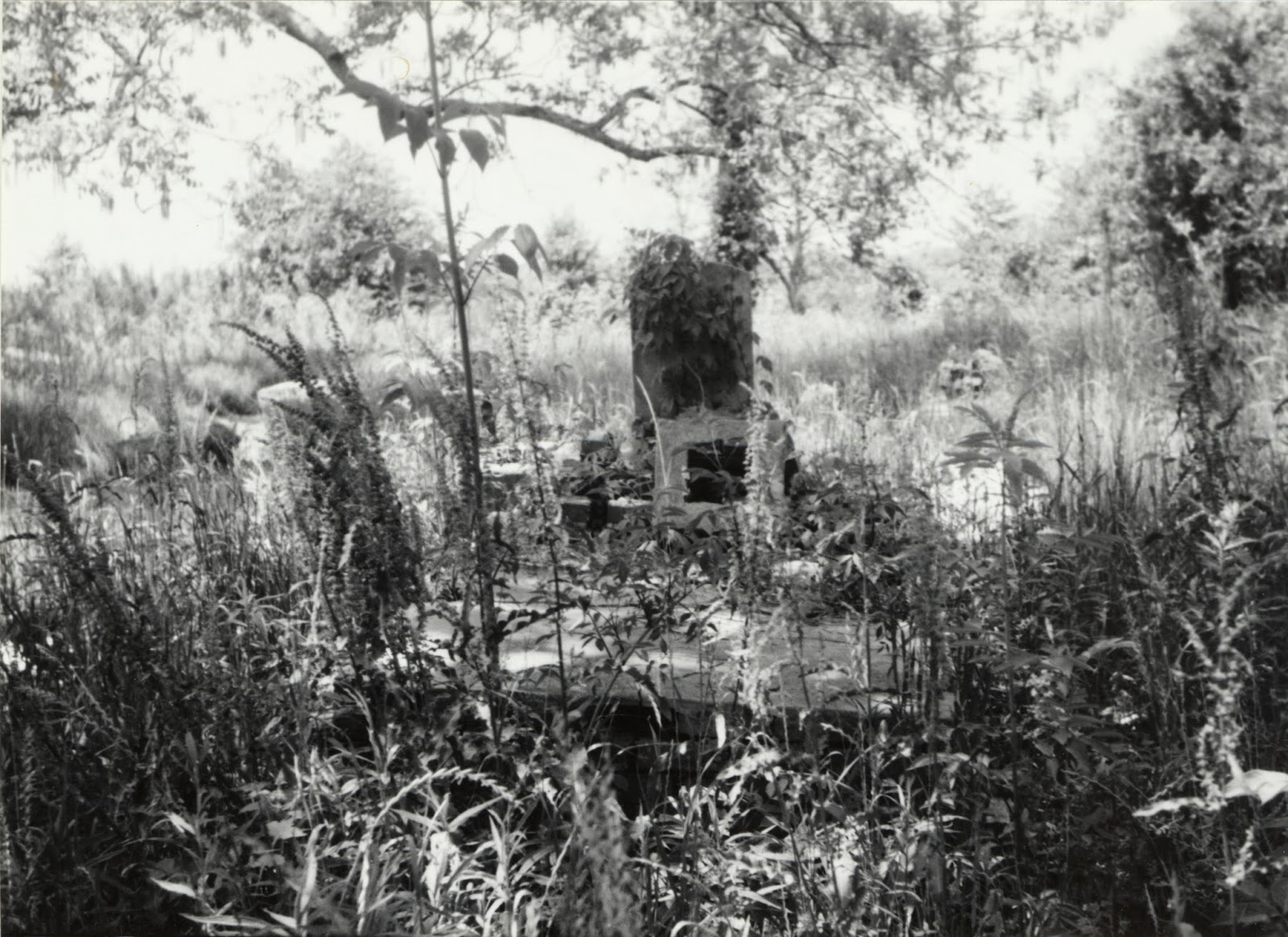
All of these factors play in to the deterioration of community and the changing landscape. In A Gathering of Old Men (1983), all that are left on Marshall Plantation are the old and the very young. Gaines discusses this very fact in a short speech about the novel that can be found in the archives. As I’ve mentioned in a previous post, Gaines sees change as inevitable. It will occur; however, there are certain things that he truly wants to preserve on the land. One of these is the cemetery where his ancestors are buried. In A Gathering of Old Men, the fear of the cemetery being plowed under becomes a serious threat. Telling Mapes why he decided to stand, Johnny Paul and the other men begin to talk about the past. He informs Mapes that he can’t see anything but the weeds behind the plantation, but Johnny Paul and the others see much more. They see their lives, their community. Part of that community is the graveyard. Johnny Paul tells Mapes, “I did it for them back there under them trees. I did it ‘cause that tractor is getting closer and closer to that graveyard, and I was scared if I didn’t do it, one day that tractor was go’n come in there and plow up them graves, getting rid of all proof that we ever was” (92). The physical proof of the Washingtons and other families moving in Catherine Carmier has disappeared. All that remains are the memories of Jackson, Madame Bayonne, and the others in the Quarters. The cemetery remains a physical representation of the people who lived on and worked the land. It is a tangible place that can be seen and serves as a locus for the shared memory of the community.

This is only one theme from Catherine Carmier that continually appears in Gaines’ work. I have not even scratched the surface of this topic in Catherine Carmier, let alone in Gaines’ oeuvre. Catherine Carmier explores, as Thadious M. Davis puts it, “the dichotomy between condition of modern plantation life and the values inherent within the people living in the plantation system” (276). This dichotomy becomes apparent when thinking about the ways that the landscape has changed since Jackson left for California. In the next post, I will talk about the teacher figures that appear in Gaines’ work. Jackson serves as introductions to these characters.         

Davis, Thadious M. Southscapes: Geographies of Race, Region, & Literature. Chapel Hill: University of North Carolina Press, 2011. Print. 
Gaines, Ernest J. Catherine Carmier. New York: Vintage Books, 1993. Print. 
Gaines, Ernest J. A Gathering of Old Men. New York: Vintage Books, 1983. Print.  

Tuesday, July 29, 2014

Gaines and the Struggle to Become a Writer

1964 cover
Catherine Carmier (1964), on first glance, comes across as a Romeo & Juliet type of story. However, nothing could be further from the truth. Published when Gaines was 31, the novel provides an essential starting point to understand Gaines' work. Catherine Carmier provides readers with the major themes and character types that they will see all the way through Gaines' oeuvre. Mary Ellen Doyle even states, "This last novel [A Lesson before Dying], especially, reminds one--with significant differences--of the first" (203). I will discuss the themes and character types that begin in Catherine Carmier in the next blog post. Here, I want to talk about Gaines' determination to succeed as a writer and to have his first novel published.


When he moved to Vallejo, California in 1948 to be with his mother and his step-father, Gaines entered a library for the first time, by accident. His step-father didn't want him hanging around the street corners, so Gaines went to the YMCA first. There, he laced up a pair of boxing gloves and fought someone who knew how to box. The other pugilist punched Gaines in the mouth, and at that point, Gaines "took the boxing gloves off with the teeth that were not loosened, and went to the library" ("Auntie," 22). The library opened up numerous worlds to Gaines. He read the French and Russian writers who described the peasants in their own countries. He came across other authors as well. However, none of the books they wrote contained his people from Southern Louisiana. Not seeing his people in the novels, Gaines decided he would write about them and the land where they resided, providing them with a voice. Discussing his desire to become an author in "Auntie and the Black Experience in Louisiana," Gaines talks about why he chose to write about the area where he grew up instead of writing about New Orleans or San Francisco. The passes is worth quoting at length:
So I thought that it was about time that I did my own book about that little place that I had come from. After writing in long hand what I thought was a book, I then begged my mother to rent me a typewriter. She did, not because she thought I would become a writer, or that she wanted me to become a writer--she did it to keep me quiet. My step-father made a trip home from the Merchant Marines that summer--the summer of 49--and each time he passed by me pecking at the typewriter, he would say to himself, but loud enough for me to hear: "That boy going crazy there, yeah." My friends wanted me to play softball or football, and when I did not show up to the park, they would come by the house to see what was going on. They laughed when I told them I was writing a book. When I read them a part of what I had written, they said, "No, if you're going to write, write about us here. Lay off that plantation stuff everybody's trying to forget. If you're going to write about the South, at least write about New Orleans." But New Orleans was not my home; I lived a hundred miles from New Orleans. Oscar, in Pointe Coupee Parish, was my home and I had someone there who I would never deny [Aunt Augusteen]. ("Auntie," 22-23)    
With all of this in mind, why write about Oscar, Louisiana and not New Orleans, especially while others like Richard Wright wrote about urban Chicago and James Baldwin wrote about New York? Why drudge up the past when moving forward is what mattered? Why should we concern ourselves with individuals who lived not in the cosmopolitan city of New Orleans but in the farmland of Oscar? We should care because their stories matter. Gaines saw this from the beginning. He did not see the people that he knew in the history books or novels that he read for school. Unless Gaines wrote about them, they would remain nonexistent to the public. They would be buried in the unmarked graves behind Riverlake Plantation and eventually removed in the name of agricultural progress. This, in a nutshell, is why we have Catherine Carmier and Gaines' later works.

Undated Meal List
After completing the novel in 1949, Gaines sent it off to a publisher in New York. He waited to hear what fortunes The Little Stream would bring him so that he could send money back to Louisiana. No fortunes came; instead, the manuscript returned, rejected by the publishing house. Gaines went to the incinerator in the back yard and burned The Little Stream. The novel that originated that summer would not see the light of day until 1964. During the time between the initial rejection and the publication of Catherine Carmier, Gaines attended San Francisco State College, went into the military, and continued writing, even having a few short stories published. He read more and wrote more. After graduating from college in 1957, Gaines gave himself ten years to become a writer. He would write in the morning and work at jobs that he didn't necessarily like in the afternoons. He survived on around $175 a month.


Even though Catherine Carmier appeared in 1964 and won the Joseph Henry Jackson Literary Prize, it did not sell well. Gaines didn't receive some independence to write until he garnered a small book contract in 1966. Part of the novel's lackluster sales had to do with movement towards a more militant stance regarding African American literature. While some argue that Gaines lacks the "militant" angle, it can be seen in his writing and interviews. In 1975, he told Tom Carter that the last thing Southern whites wanted to see was humanity in African Americans: "I knew the way to show that humanity was to do something positive. Some guys get angry and go to a punching bag. As they're jabbing at it they're developing their muscles; they're getting sharper. I try to use the anger in a positive way, to create a lasting punch, one that will have a longer effect than just screaming or calling somebody an MF or son of a bitch" (84).

As some African American authors such as Amiri Baraka saw literature as purely protest, eschewing style for content, Gaines saw that style as well as substance needs to be considered. As he heard about the violence during the 1960s, especially in the South, Gaines said, "I would sit at my desk until I had written the perfect page" because through writing the perfect page "I would show the Bull Connors and the Faubeses, and the Wallaces and the Thurmans that I could do anything with those twenty six letters that they could, and I could do it better than any of them could" ("Auntie," 26). By taking this stance, Gaines inspired other writers, among them Alice Walker. In a 1969 letter housed in the Ernest J. Gaines Center, Walker discusses the influence of Gaines' short story "The Sky is Gray" and his use of dialect on her writing. She also mentions that after reading Of Love and Dust and Bloodline from noon till six in the morning she is "only sorry not to have Catherine Carmier to read now." Later, in a 1971 letter to Dial Press after the publication of The Autobiography of Miss Jane Pittman, she writes a postscript, "If ever Catherine Carmier is re-issued (the only Gaines fiction I haven't read), I hope I will be one of the very first to know." Even in 1971, Walker could not find a copy of the novel. Later, it would be reissued, translated, and widely available a people throughout the world recognized Gaines work.

Carter, Tom. "Ernest Gaines." Conversations with Ernest Gaines. Ed. John Lowe. Jackson: University of Mississippi Press, 1995. 80-85. Print.

Doyle, Mary Ellen. Voices from the Quarters: The Fiction of Ernest J. Gaines. Baton Rouge: Louisiana State University Press, 2002. Print.

Gaines, Ernest J. "Auntie and the Black Experience in Louisiana." Louisiana Tapestry: The Ethnic Weave of St. Landry Parish. Eds. Vaughn B. Baker and Jean T. Kreamer. Lafayette: Center for Louisiana Studies, 1983. 20-29. Print.

Thursday, July 24, 2014

Year of Anniversaries


The picture above is one of the display cases in the Ernest J. Gaines Center. It contains items representing four of the major anniversaries related to Gaines and his work this year. From left to right in the case you will see a first edition copy of Catherine Carmier (1964) and a notebook containing one of the first drafts entitled "Barren Summer." Next, there is a first edition copy of The Autobiography of Miss Jane Pittman (1971), a pamphlet celebrating the opening of the Miss Jane Pittman Fountain, and a Miss Jane Pittman Fountain pen. In the center is the National Medal of Arts award that Gaines received in 2013 and immediately below is a two page grant application for The Autobiography of Miss Jane Pittman where Gaines outlines what the novel will be about. On the right is the promotional booklet for HBO's 1999 film version of A Lesson before Dying and a photo and write-up from CBS's 1974 film version of The Autobiography of Miss Jane Pittman.

The four anniversaries are:
  1. The 50th anniversary of the publication of Catherine Carmier (1964)
  2. The 40th anniversary of the film version of The Autobiography of Miss Jane Pittman (1974)
  3. The 25th anniversary of the Miss Jane Pittman Drinking Fountain in Rochester, NY (1989)
  4. The 15th anniversary of the film version of A Lesson before Dying (1999)
Over the next few posts, I will take the time to discuss these anniversaries and their significance, not only to Gaines as a writer but also to culture as a whole. So, stayed tuned, and remember, join in the discussion below in the comments.  

Thursday, May 29, 2014

The Cemetery and the Church

Inside of church
In the previous post, I talked about Gaines' relationship to the land where he grew up. That land appears in all of his fiction from his first novel Catherine Carmier all the way through A Lesson before Dying. Talking about the land with Marcia Gaudet and Carl Wotton even further, Gaines says, "[T]his land is constantly changing;" however, he does not keep up with that change since "[his] people no longer live there" (74). Even though he does not keep up with the change, he adamantly states that anything can happen to the land "[a]s long as they don't destroy the cemetery where my people are buried, or the church they worshiped in" (74). These specific places, the cemetery and the church, appear again and again in Gaines' work in relation to the changing landscape. Gaines' respect for these places can be seen in his literature and his life. He has preserved the cemetery and he had the church where went to school moved to a spot directly behind his house.


While walking through the quarters in chapter thirty-eight of Catherine Carmier, Jackson comes across the cemetery and the church. Jackson "looked through the fence at places where graves ought to be, or where he thought they had been. He could not see any graves for high weeds, and he was not sure that he was looking in the right places" (191). Jackson inability to recognize the graves causes him to feel empty. Unlike Jackson, the men that gather at Marshall Plantation in A Gathering of Old Men visit the cemetery before they arrive on the gallery to stand beside Mathu against Fix and his men. Cherry describes the cemetery by saying, "You had to walk in grass knee-high to reach some of the graves" (45). The area, to Jackson and to Cherry, is overgrown and is in the process of erasing any indication of the people who once lived and worked on the land. Later in the novel, Johnny Paul confronts Mapes about why he and the other men chose to stand:
I did it for them back there under them trees. I did it 'cause that tractor is getting closer and closer to that graveyard, and I was scared if I didn't do it, one day that tractor was go'n come in there and plow up them graves, getting rid of all proof that we ever was. (93) 
Cemetery pre-cleanup
Johnny Paul talks about the cemetery and about the human machinations that threaten its very existence. The white land owners don't care about the cemetery and they bring in tractors and other farming machines to get the most out of the land for the cheapest expenditures. The increased use of tractors and other farm machines is another constant threat to the land and its people that Gaines brings up throughout his oeuvre: Catherine Carmier, Bloodline, The Autobiography of Miss Jane Pittman, In My Father's House, and A Gathering of Old Men.


The church where Gaines went to school and worshiped that he mentions in the quote in above appears in Catherine Carmier as well. After visiting the cemetery, Jackson walks to the church. He begins to reminisce about how large the church used to feel and how things have changed since he went to school there. He thinks about how far the pews used to feel from the table in the front of the church. He even recalls the whippings he received from Madame Bayonne. Walking around the perimeter, Jackson looks at the surrounding area and sees "[a] sugar-cane field came all the way up to the yard from the side and from the back" (192). Just as the fields encroach upon the cemetery in A Gathering of Old Men, they encroach upon the church.

These two spaces, the cemetery and the church, play an important role in Gaines' fiction of the quarters and Bayonne. In later blog posts, I will discuss the church and cemetery and other works.

Gaines, Ernest. Catherine Carmier. New York: Vintage Books, 1993. Print.

Gaines, Ernest. A Gathering of Old Men. New York: Vintage Books, 1984. Print.

Gaudet, Marcia and Carl Wooton. Porch Talk with Ernest Gaines: Conversations on the Writer's                 Craft. Baton Rouge: Louisiana State University Press, 1990. Print.