Showing posts with label randall kenan. Show all posts

Thursday, March 26, 2015

"A Visitation of Spirits" and the Past

African American sharecropper and wife
grading tobacco in North Carolina (New York Public Library)
On Tuesday, I wrote about the idea of "the One" in Randall Kenan's A Visitation of Spirits and in the works of Ernest Gaines. Today, I want to briefly touch on another aspect of Kenan's novel that bears similarities to Gaines's work, specifically his descriptions and ruminations on the changing landscape and movement away from the past. There are numerous points in the narrative that focus on the changing land, but perhaps the most important is the conclusion of the book, Horace's confession and more importantly the section entitled "Requiem for Tobacco." As Thadious Davis notes, this section can be seen in relation to Gaines because "the nature of the rural and the farming communities is past, but it provides a space from which to understand the present" (333).

"Requiem for Tobacco" begins nostalgically, almost like a myth that was once true but as of now no longer exists.
You remember, though perhaps you don't, that once upon a time men harvested tobacco by hand. There was a time when folk were bound together in a community, as one, and helped one person this day and that day another, and another the next, to see that everyone got his tobacco crop in the barn each week, and that it was fired and cured and taken to a packhouse to be graded and eventually sent to market. But this was once upon a time. (254)
"Once upon a time," as Davis notes, carries with it a note of mythologizing the harvest. The phrase, in one form or another, appears twice in the paragraph above, once at the beginning and once at the end. Along with this phrase, there is also a focus on community. Looking to the past, the narrator points out that it "was a time when folk were bound together in community." Community plays a major role in Gaines's work, and in Kenan's novel, the community that "Requiem for Tobacco" recalls does not exist anymore. Instead, the community does not help one another out; in fact, it hinders the psychological growth of the presumed One, Horace.  

After speaking about the planting, harvesting, and drying of the tobacco. Men like Edgar Harris and George Pickett would plant and harvest the tobacco then bring it to the barn where the women would tie the tobacco together. Underneath the tin ceiling, time would fade away, problems would be solved, and the older women would "impart good and practical wisdom to younger girls" (256). All of this though, happened in the past. Over time, the land, and who cultivated it, changed. The encroachment of modernity upon the rural North Carolina community recalls the continued approach of mechanized farming in Catherine Carmier and A Gathering of Old Men.  Now, Edgar Harris lies in a grave somewhere and "George Pickett has leased his land and now drives a bus" (256). Pickett's land then became divided again, sold to someone who had a lot of land, "someone who is no one at all, but many in the name of one," a corporation like the one that harvests sugarcane in Attica Locke's The Cutting Season (256). Instead of hands doing the work, "the clacking metal and durable rubber of a harvester that needs no men, that picks the leaves, stores the leaves, slaps them into small bulk barns that looks like chicken coops that cure quicker, easier, cheaper" replaced the people in the fields (256-57). The increase in mechanized farming and corporations concerned more with profit margins than with people push the memories of Hiram Crum, Ada Mae Philips, Jess Stokes, Henry Perry, and Lena Wilson to the side, letting them drift in the wind like the dust kicked up by a laboring tractor.

"Requiem for Tobacco," and the novel, concludes with paragraph that laments the passing of time. Even though machines make farming "less torturous," they also erased the past. With the movement of modernity, the past becomes forgotten, only to be recalled when modernity causes us to feel more disoriented then ever from trying to keep up. That is when we turn to the rural, the pastoral, for an escape from the overwhelming onslaught. That should not be the only time. As the narrator concludes, "And it is good to remember that people were bound to" the process of growing tobacco "for too many forget" (257). This is what Gaines writes for. This is what Kenan's A Visitation of Spirits does. They cause us to remember, to look at the past and to recall how we made it to the present.

Wood Plank Road in Fayettville, NC (1984)
There are other scenes throughout the novel that deal with the changing land. Specifically, I am thinking about Jimmy, Ruth, and Zeke's drive to see Asa in the hospital. During the drive, Zeke begins to think about the past and how much things have changed. He contemplates the road between Fayettville and Wilmington. Zeke recalls when the road was nothing more than a "wood-plank" and a man would be better off "tak[ing] a train than drive a mule and cart all them seventy-so miles" (47). He continues by thinking that today people take cars, making the trip between the two town so much easier. They get in, start the car, then drive. People "[t]ake them for granted" (47). Zeke highlights the movement of time and the increased mechanization of the world, in this instance with the automobile.

What other instances in Kenan's novel highlight the changing times? Are there other instances that remind you of Gaines or other Southern authors? If so, what are they?    


Davis, Thadious M. Southscapes: Geographies of Race, Region, & Literature. Chapel Hill: University of North Carolina Press, 2011. Print.
Kenan, Randall. A Visitation of Spirits. New York: Grove Press, 1989. Print.

Tuesday, March 24, 2015

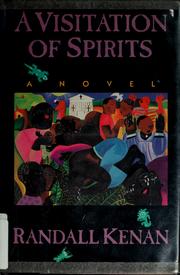
Randall Kenan's "A Visitation of Spirits"


On the surface, Randall Kenan's A Visitation of Spirits (1989) may not seem similar to works by Ernest J. Gaines, at least in regards to the writing style. Kenan's novel oscillates from narrative to narrative in a postmodernist stream-of-consciousness flow. Gaines, on the other hand, writes in a more straight forward narrative style that mirrors Hemingway, with the occasional stream-of-consciousness here and there. While styles do not necessarily link Gaines and Kenan, other similarities do arise here and there. What one sees when reading Gaines and Kenan in unison arises from the thematic similarities of two African American men from the South but born thirty years apart. Even though he was born in New York, Kenan grew up in North Carolina, and Chinquapin, NC, serves as the inspiration for Tims Creek, the community where Kenan sets his fiction. Along with the creation of specific space like Gaines's Bayonne and Faulkner's Yoknapatawpha County, he allows for a sense of reality in his fiction, even though the novel is very speculative, filled with demons and other spirits that occupy the mind of Horace Cross.

While reading, there are certain aspects of A Visitation of Spirits that make me think of Gaines and Southern writers. For one, I think about community. Gaines's works center on community, as I have noted before. The community in the quarters, to a certain extent, serves as a space where the African American occupants do not come face-to-face with racism and oppression as they do when they go to town. Think about Gaines's "The Sky is Gray" here. James does not experience overt subjugation in the quarters; he experiences community. When he goes to Bayonne, he starts to come more overtly into contact with the systems that keep him oppressed. In Gaines's work, the community struggles with the legacy of slavery, but they all form a system that supports and works together. However, as Trudier Harris argues, "the legacies of slavery are somewhat in the background" of Kenan's novel, and "a sense of black family tradition has become so all-consuming that it is perhaps worse than slavery" (115). At the center of this "all-consuming" community is Horace Cross, "the Chosen Nigger" (13). Harris points out that Horace's being labeled "the One" that will serve as a leader for the community mirrors numerous characters in Gaines's works, most specifically Ned Douglass and Jimmy Aaron in The Autobiography of Miss Jane Pittman (1971).  

While Ned and Jimmy both succeed in becoming "the one," Horace Cross cannot. He studies, maintains good grades, and works hard to become something extraordinary beyond the teachers, preachers, and lawyers that surround him. However, Horace is gay, and the patriarchal, heterosexual family lineage that values the conquering of "pussy"  does not allow for a homosexual leader (55). Instead of being lifted up and groomed to be the leader of the people, the community diminishes Horace's worth and condemns him vociferously. In the church at night, Horace envisions the pastor condemning him from the pulpit and calling him calling him "unclean." Then, Horace starts to hear voices from the congregation, including his family. They say,
Wicked. Wicked.
Abomination.
Man lover!
Child molester!
Sissy!
Greyboy!
Old men, little girls, widows and workers, he saw no faces, knew no names, but the voices, the voices . . .
Unclean bastard!
Be ashamed of yourself!
Filthy knob polisher! (86-87)
Through their name calling and other actions, the community that initially labels Horace as "the One" systematically tears him down, refusing to accept him as he is and leading him to his ultimate demise. In Kenan's novel, the downfall of "the One" does not come from the outside community, the white community that tries to maintain its rule over the African American community. Instead, the destruction occurs from the inside. This is not to say that the residual effects of slavery do not contribute to the people "othering" Horace. I would even argue that the labeling of Horace as "the Chosen Nigger" works to devalue his place as well. Instead of calling him "the chosen One," the epithet used completely reduces Horace to a person who will not become a savior for those around him but to someone who will go through life subjugated and beaten down by a system that continually strives to maintain control.

In the next post, I will talk about another similarity I see between Gaines and Kenan: the land. Both authors describe the land thoroughly, and its changing appearance. What similarities do you see between the two authors? Let me know in the comments below.

Harris, Trudier. The Scary Mason-Dixon Line: African American Writers and the South. Baton Rouge: LSU Press, 2009. Print. 
Kenan, Randall. A Visitation of Spirits. New York: Grove Press, 1989. Print.